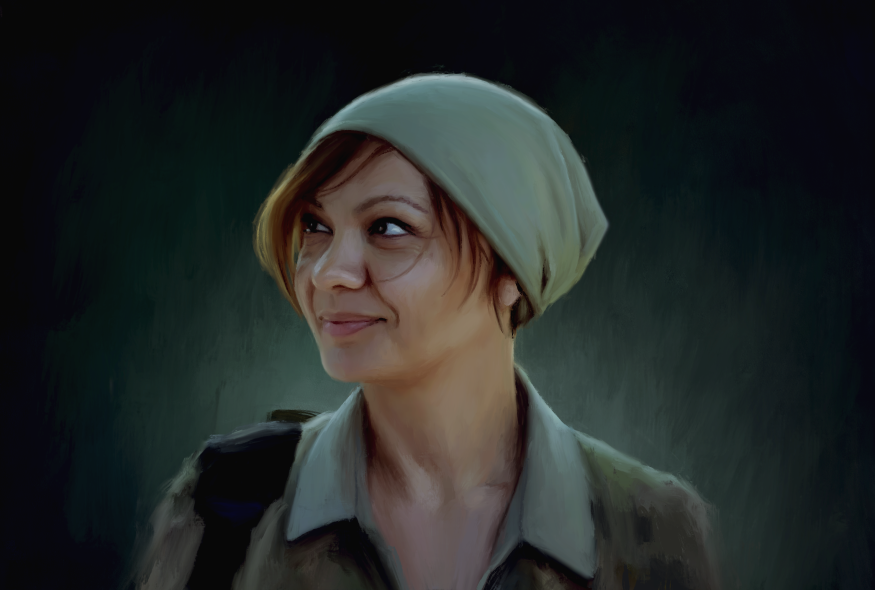
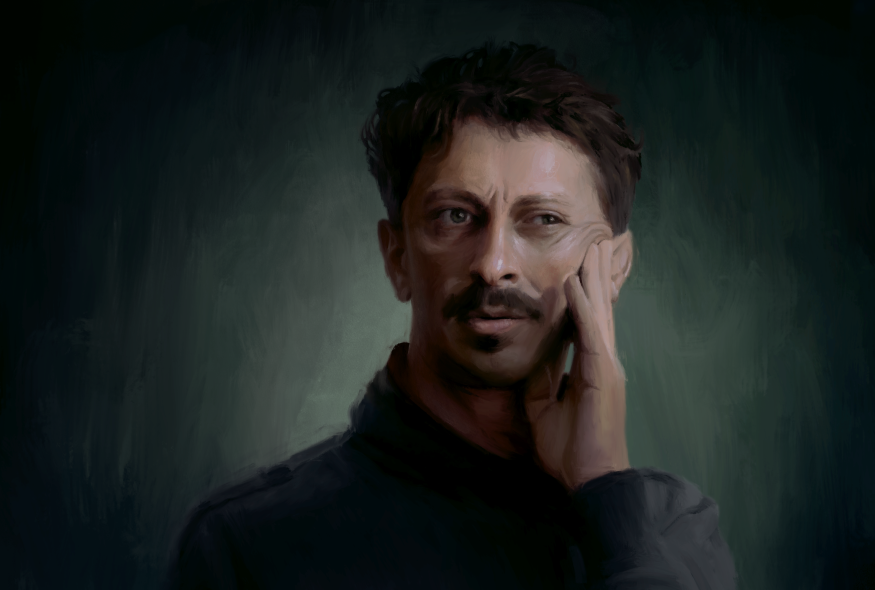
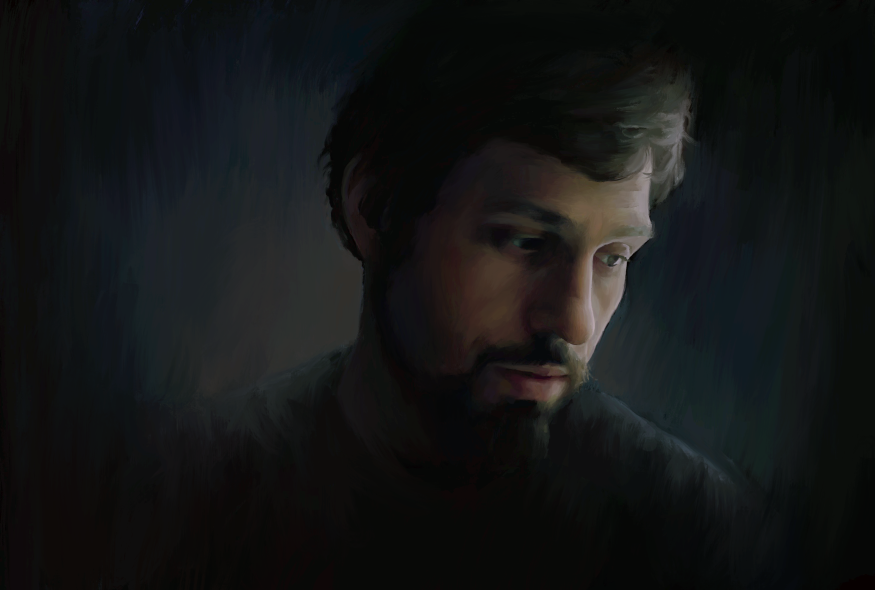
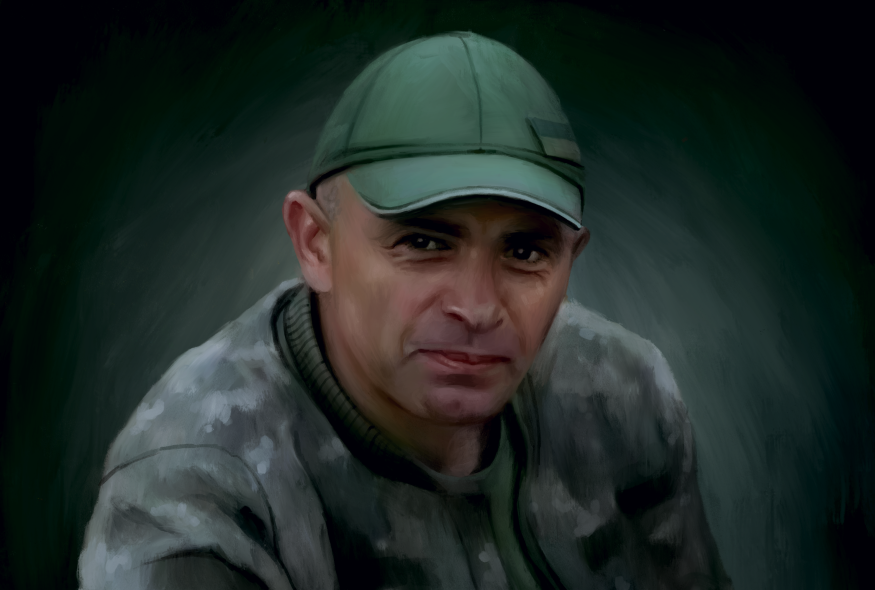
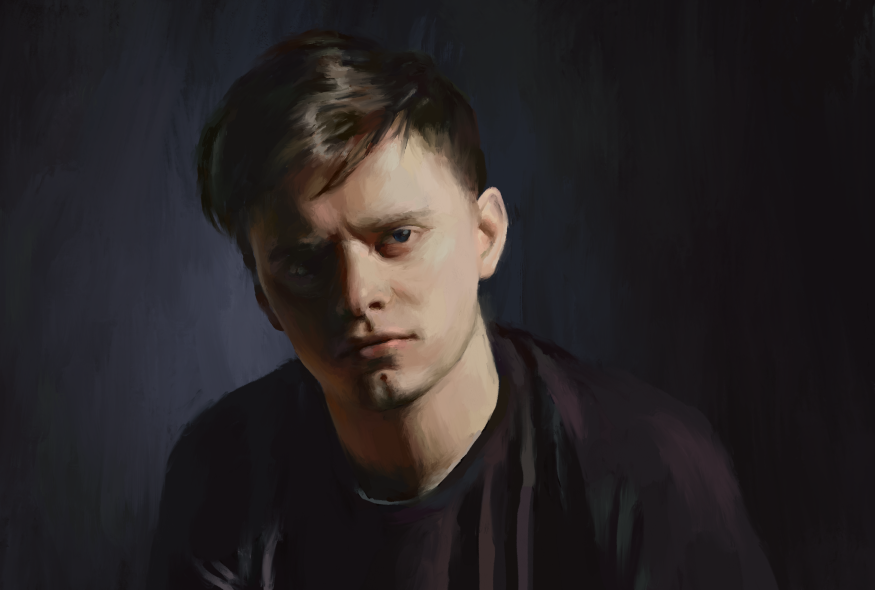
Yevhen Hulevych: Tuning into the World
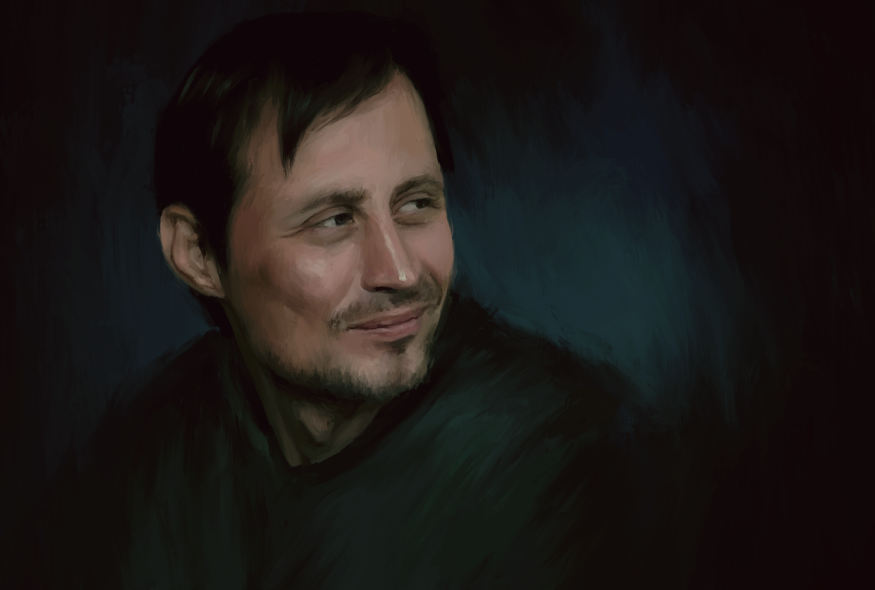
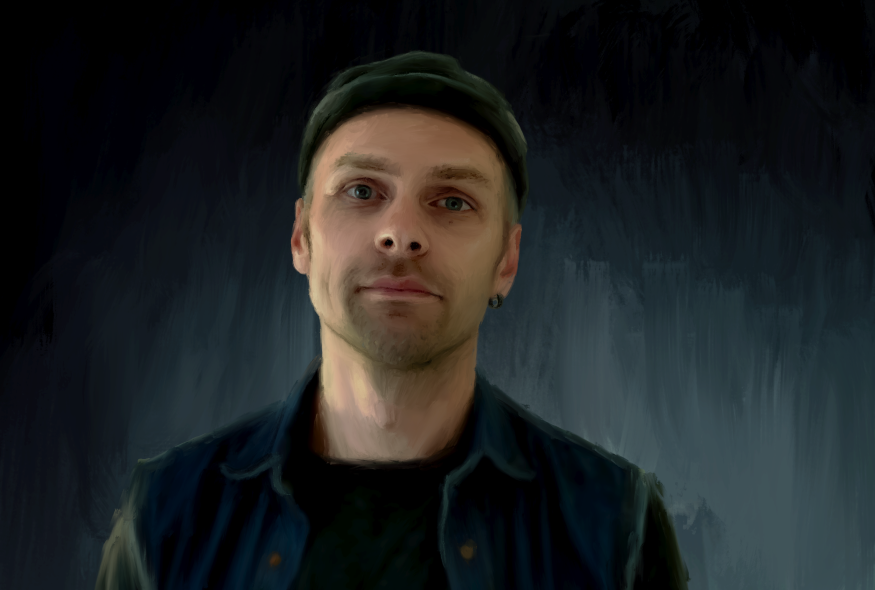
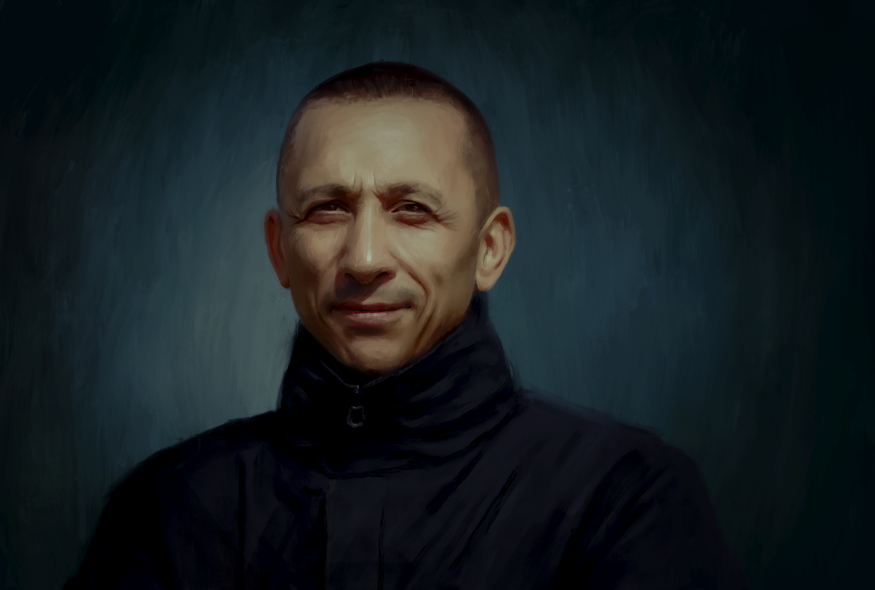
In Lviv's intellectual circles, it's rare to encounter someone who didn't cross paths or work with Yevhen Hulevych over the past twenty years. Hulevych was known for his multifaceted roles as a cultural critic, researcher, editor, translator, curator, and cultural activist.
"Yevhen was everyone’s friend," wrote Serhiy Kostyshyn after receiving the news of his friend’s death.
Those who worked and communicated with Hulevych remember him as a man who cherished words above all else – someone who delved meticulously into language, analyzing it with a desire to uncover the essence of things. He was known for taking ample time and paying close attention to word choice.
"To the depths, to the essence, to the root of things, to the bosom, to the core of the word, and to the core of the sun!" he aspired, following in the footsteps of Bohdan-Ihor Antonych, whose collection of poems Hulevych was, among other things, involved in curating.
Yevhen Hulevych shaped himself as an intellectual. Others were forming their intellectual paths alongside him. His chosen profession as a journalist soon ceased to meet his research interests. From 2000-2002, Hulevych took part in the training conducted by Maria Hablevych's Translation Workshop, and in 2003, he entered the experimental Master’s program in Cultural Studies at Lviv National University. While participating in projects at the Center for Humanities at Lviv University, Hulevych first became an employee, and a few years later, its director.
Hulevych would often explain complex things in a complex manner. He kept his voice low, prompting his interlocutors to listen attentively and think about what he was saying. He crystallized the cultural triad of anthropos - topos - tropos in discussions with his colleagues, meaning human/personality - place/environment/cultural context - idea/metaphor/way of being. It was around these principles that he constructed his intellectual projects.
"The need to hear is greater than the need to see during wartime," he said in one of his last public talks. Shortly afterward, he asked his friends to send a voice recorder to the front to record the sounds of war. Even after becoming a machine gunner, Hulevych remained a cultural critic.
On December 31, 2022, a sniper’s bullet pierced his forehead, killing him. "Even his death was honed," noted his colleague and friend Natalia Babalyk, "not from a shell or fragment, but from a well-aimed shot, as if perfected to the last point."
Hulevych wrote a lot and published little. He often initiated projects, but he himself remained in the shadows. So what were his anthropos, topos, and tropos? Who was he as a person? In what context did he create? What was his way of being?
**
A tall, slim young man with a gaze fixed attentively somewhere beyond the horizon—this is how Natalia Babalyk, a colleague at the Center for the Humanities, described one of her first memories of Yevhen Hulevych. The young Hulevych had long, dyed hair tied back into a ponytail. During his university studies, he gave the impression of being a mysterious figure who constantly challenged himself. Hulevych could walk around in the winter wearing only a T-shirt and trousers, tempering his body and spirit. Or he would suddenly stop talking for weeks—not out of disdain for the people around him or mental anxiety, but for the sake of his personal experience, which he later described in a research paper on silence in culture.
Hulevych was a meticulous editor. He would dive deeply into a text, break it down into elements, and reassemble it back together. Not every author appreciated this. "Whether you liked it or not, Yevhen wanted to understand the way you thought and how that thinking was transformed into a text. He would bombard you with endless ‘why’s’..." recalled his friend and colleague Bohdan Shumylovych, "Everything became an argument but with no offense intended. Sooner than later we would cool off, meet back up, and work together to get to the root of the matter."
Hulevych’s translation choices also seemed unexpected and unobvious. Having learned Spanish and English on his own, he masterfully transferred the linguistic inventions of the text from one medium to another. Even native speakers learned something new about their language in his texts.
Hulevych dared to be provocative in Lviv’s cultural milieu, recalled photographer and close friend Yuriy Kalyniak. Many people appreciated the opportunity to put their ideas through the crucible of Hulevych’s doubts. If the idea held up, then it was worthy of attention and effort.
The cultural critic has no profession, only a tireless interest in various phenomena. In 2015, after leaving the Center for the Humanities, Yevhen returned to Kalush, his family’s home. In the tranquility of the small town, he found a new research field in plant cultivation. He was interested in the entire process—from planting to harvesting. Like a true Voltairean hero, Hulevych preferred to tend his garden wherever it was, whether in words or in soil.
"Yevhen was always sharpening knives for all of us. But it was only after his death that I found out he had molded himself as a samurai," recalled Natalia Babalyk. Hulevych mastered all the Chinese and Japanese techniques for sharpening blades. His mind penetrated wherever his interest took him, and his words were as sharp as his knives.
"I don’t need anything I can’t make myself," he wrote from the front. It seems that this was exactly the kind of person he was, his anthropos being inquisitive, stubborn and self-sufficient.
**
Hulevych's word was corporeal. Tuning into the world was his main form of interaction with it.
Fascinated by the ideas of the Spanish-Swedish philosopher José Luis Ramírez, Hulevych began translating his notes on language and irony, organized his visit to Lviv, and, until his last days, chatted with him on social media.
According to Ramírez, language serves not only to communicate with others but primarily to facilitate self-understanding. "The speaker, even if unconsciously, reveals more than he says, simply by the way he expresses it," Ramírez states in Hulevych's translation, "Language appears as a window pane through which (dia logos) we express meaning (sentido)".
For Ramírez, as well as for Hulevych, this meaning did not simply motivate a person to act. Meaning itself was merely action, activity: "it is a word, a verb."
In one of his Facebook posts, Hulevych discussed the role of the particle, an archaic layer of oral language that the written language is always trying to get rid of. In his view, language did not live as a completed thought, but "in the field of constant learning and expression."
"We express our attitudes in fragments and blend them into the conversation without significant pauses or interruptions.... the first cries of a baby are still with us, the first distinctions, statements, denials, amplifications, inducements, clarifications, and indications," Hulevych wrote, as if stuttering slightly in his own language.
His friends remember him as someone who not only knew how to ask the right questions but listen attentively. Hulevych considered silence as an act. We consider a verb as his topos. It refers to thinking, which can be bodily, and the mind, which can be a feeling. Tuning into the world, people, and war was his personal practice, which he was happy to share. Perhaps the idea of recording the sounds of war came from a desire to hear the silence between its noises.
**
Even when he served as director of the Center for the Humanities, Yevhen Hulevych did not stray from the image of a spontaneous philosopher-flâneur. "He could spend all day writing a scholarly article or translating an academic text and then suddenly take a break to wander the streets of the city, equally focused and intense in his thinking about what he saw around him," recalled his friend and colleague Andriy Bondarenko.
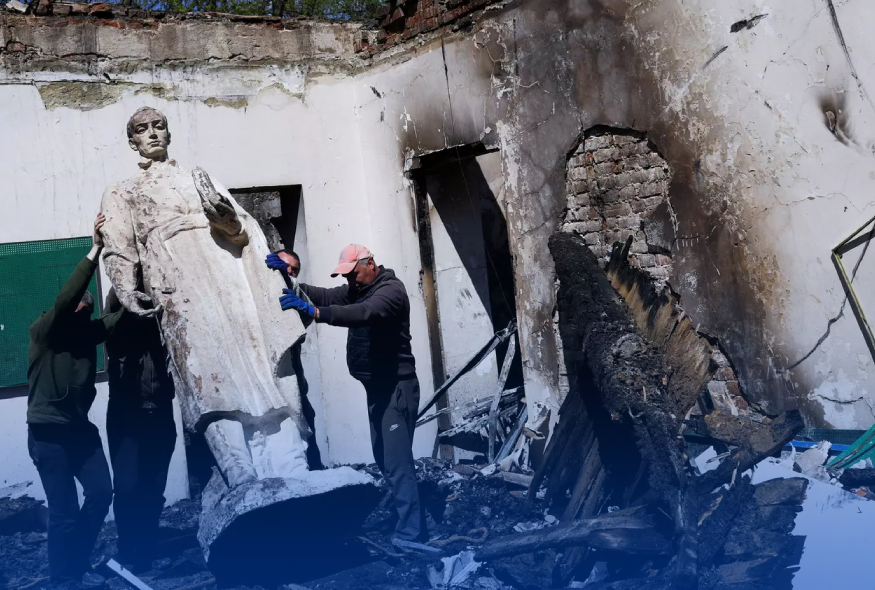
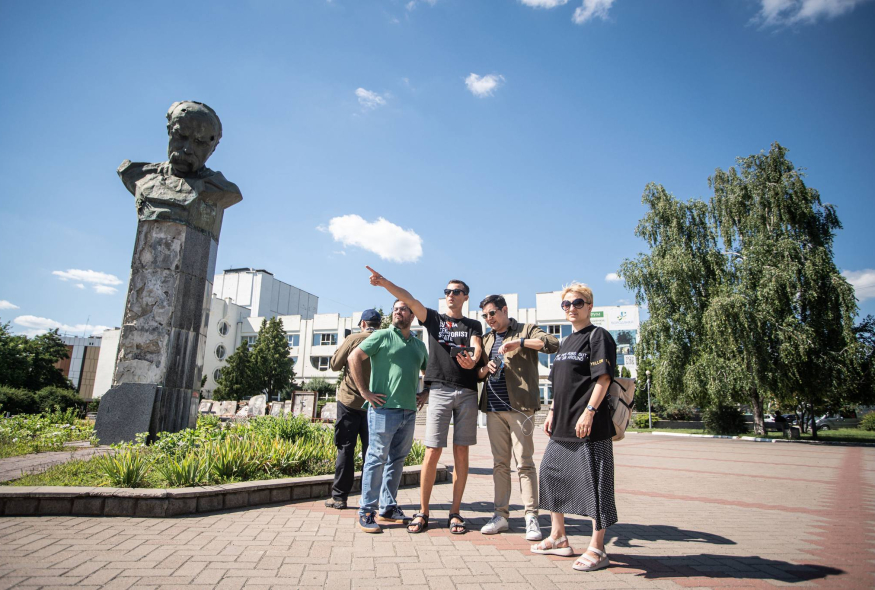
Neither his position nor his work with academic texts deprived him of his interest in spontaneous grassroots philosophy and social issues. For instance, in the summer of 2014, Yevhen, alongside a group of like-minded individuals, orchestrated a public protest under the name "Closing." During this event, they advocated for the removal of the monument to the coffee entrepreneur Yuriy-Franz Kulchytsky from Danylo Halytsky Square. The company Halka LTD had donated the monument to the city without the consent of the community. Hulevych and his companions called this gesture an intrusion of private initiative into public space. They announced the establishment of the NGO "We Were Not Asked" and placed a wooden box over the monument. Then they demanded the monument’s removal from the city square, emphasizing that it belonged, first and foremost, to the city’s residents. In this manner, Hulevych actively pondered the fundamentals of civil society. He was interested in places and communities and the ways people lived together in them.
He and his friends were also in the process of making a documentary about the highland village of Vypchyna in the Carpathians, which had long been abandoned by its inhabitants. Once a year, the villagers returned to Vypchyna for a church festival to honor the memory of their ancestors. "We listen to life stories when we come back together," read the teaser for the film about the mountain community and its traditions that was ultimately never made. However, Hulevych’s friends intend to proceed with the production of the film.
Finding something meaningful in coming together with others was Hulevych’s way of living, his very topos.
**
"Yevhen could always find time to think and remember," the artist Yurko Vovkohon wrote in an explication of his work dedicated to Hulevych. The installation consisted of two cones and took the form of an hourglass. The upper cone was made of ice and the lower one of salt. Due to temperature changes, the ice would gradually wear away the salt, symbolizing the perpetual motion of natural processes.
"Life on earth incessantly requires us to perceive the world around us, whether we desire it or not. Life at war means seeing it through one’s own immensely small exhaustive effort: digging trenches, scrutinizing relief, and listening attentively, tuning into background noise to extract an insignificant crumb added to the nature of inhuman sense. Such is the oppression of emptiness," Hulevych wrote from what was probably under the trenches of Bakhmut.
Yevhen Hulevych did not go to war to die—he went to live. Today, his ideas and initiatives continue to thrive in various forms: the Music Festival in Lviv that persisted despite the full-scale invasion, ongoing projects on Pinsel, research on cultural heritage, and his translations of books and articles—all embodying his anthropos, topos, and tropos.
"One must speak to agree. One must keep silent to hear," Hulevych urged us in his affective and sophisticated approach to coming together and tuning into the world.
Read also:
We need your help to create projects and materials aimed to defend freedom of speech, popularize Ukrainian culture and values of independent journalism.
Your donation means support for discussions, awards, festivals, authors’ trips to regions and PEN book publications.