Oleh Sobchenko: Cossack, Artist, and Defender of Nature
"We made sure that a candle was always burning at his grave throughout the fall and winter. It feels a bit easier that way. It makes it seem like his soul is warmer," Olha Kryvolap, a volunteer and friend of Oleh, tries not to cry when she tells me about him, though her voice trembles.
"His mother, Olha Fedorivna, brings Oleh coffee every day, which he loved very much," she adds. Now I can barely hold back my tears.
The grave of Oleh Sobchenko—a dedicated activist, volunteer, artist, and soldier—is adorned with flowers. The colors of marigolds, sunflowers, and dahlias blend with those of the two flags fluttering above them: blue and yellow, and red and black.
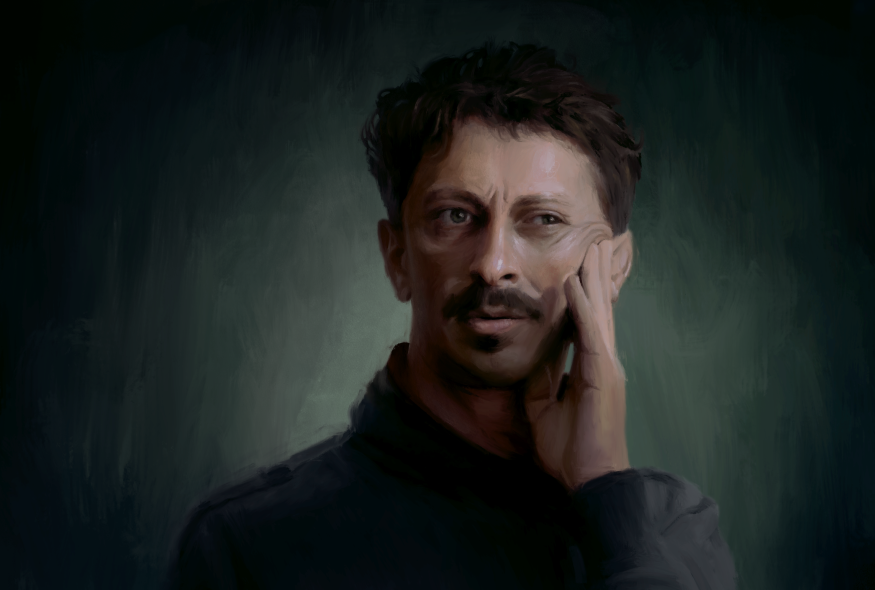
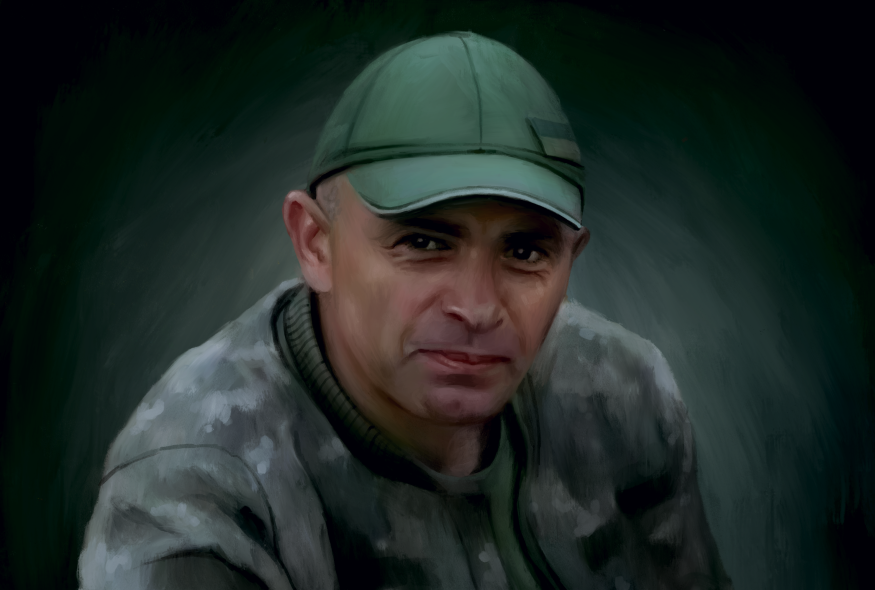
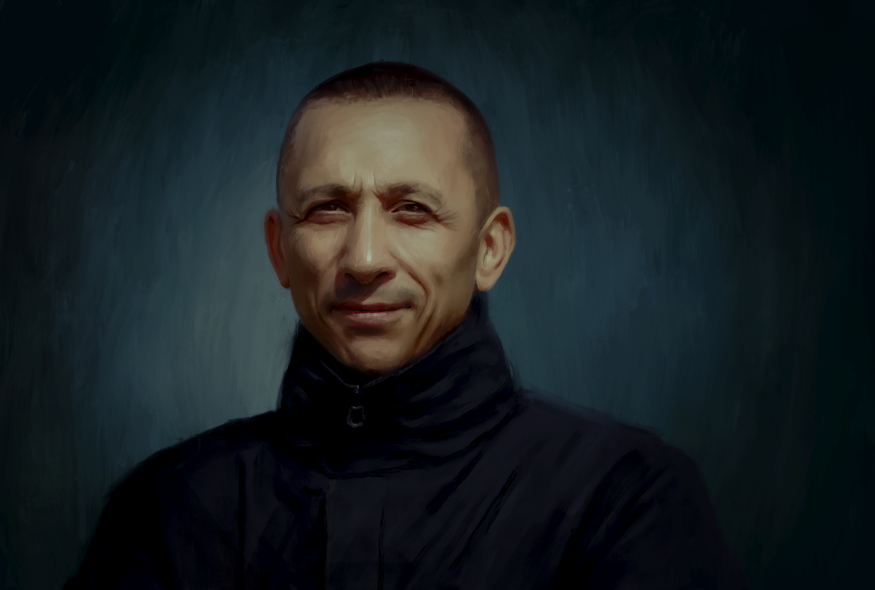
Looking at Oleh’s photo, I see a young man with a mischievous half-smile and a confident, roguish gaze. Everything about Oleh Sobchenko's image evokes the spirit of the Cossacks. That’s exactly how his friends and family describe him—a true Cossack and warrior. Moreover, Oleh was an artist who cherished beauty and created it with his own hands. Through his art, Oleh preserved Ukrainian history, which he loved and respected, by restoring monuments to Ukrainian insurgents and soldiers of the Ukrainian People's Republic.
On January 24, 2023, Oleh died in Vuhledar, Donetsk region, just short of having turned fifty. A monument honoring the heroes of the Russo-Ukrainian War, including Oleh, was erected in Kholodny Yar, a city whose history the activist fervently protected.
Friends say it was important to Oleh to know that the monuments to the fighters for independence would outlive him, and that memory would endure even when contemporaries were gone. Now he is among the heroes whose memory he himself cared for all his life.
***
"We understood that sooner or later a bigger war would start, and Oleh was preparing for it," says Ihor Lutsenko. "On February 25, we were already on the outskirts of Kyiv, which had become a full-fledged front line by then."
Ihor Lutsenko is a serviceman and activist. He met Oleh in 2014, at the beginning of the Revolution of Dignity. Oleh was on the Maidan from the early days of the uprising. He was among the activists who "marched" to Mezhyhirya, the former estate of then-president Viktor Yanukovuch. Those activists fought against the impunity of the political elite and were later hunted by titushky, paid provocateurs.
Berkut officers seriously injured Oleh during the revolution, and his friends had to take him to Lviv for medical treatment. At that time, Euromaidan activists were being persecuted in Kyiv, and it was dangerous for Oleh to stay there. Despite his injuries, he was eager to return, as he was not used to being on the sidelines of important events in the country. As early as 2012, Oleh had joined the "Language Maidan," where he went on a hunger strike in the center of Kyiv when the Yanukovych-led government tried to push the Ukrainian language out of use. Oleh also sought justice for the killers of Vasyl Serhiyenko, a journalist, activist, and hero of the Heavenly Hundred, who was tortured to death in Cherkasy region in the spring of 2014. Oleh constantly supported the journalist’s widow, attended court hearings, and did not let the authorities dismiss the case.
In 2014, when the unrest in the east began, Oleh was one of the first to rush there. At that time, there were neither weapons nor a formed army, and the country’s defense relied on volunteers and activists.
"In April 2014, when the first clashes began in Donbas, Oleh and I went there," says Ihor Lutsenko. "Of course, the main problem then was finding weapons, as we wanted to be fully combat-ready." After the revolution and the escape of president Yanukovych and his government, Ukraine’s defense relied on the self-organization of civil society. Sobchenko and Lutsenko tried to find their place in this movement.
Oleh joined the Azov Battalion and fought with them in the hottest spots of Donbas.
"Our commander died in August during the assault on Ilovaisk," Ihor continues. "Those were tragic events. Oleh continued to serve, and in 2016 he was demobilized and treated for his injuries. We, as volunteers—a kind of wild volunteer aerial reconnaissance team—periodically went to the front to help our troops."
The war in the east continued, and Oleh began a new battle against the pollution of the Ros River, near which he grew up. Being a passionate fisherman, he couldn’t ignore the fish die-offs and water blooms, so he started organizing the Korsun community to save the river.
In the house where Oleh grew up, you could see the Ros River in all its beauty, as his family home is located only a hundred meters away. According to Oleh’s friends, he couldn’t help but fall in love with this river, just as he couldn’t help but protect it from those who were destroying it.
"Oleh even has a post on Facebook from July 2022, where he’s sitting in the brush near a car: explosions are heard nearby, he’s in a bulletproof vest, and he’s recording a video about what’s happening with the Ros," recalls Olha Kryvolap. "He was thinking about the river and how to save it even when he was defending us on the front lines."
During Oleh’s lifetime, the residents of Korsun registered a petition to preserve the Ros. It gathered almost three thousand signatures before stalling. When Oleh died, the petition quickly gained the necessary signatures. According to his friends, Oleh’s loss mobilized the community. It has proven difficult to protect the river without the activist, though.
"We're trying, but it's hard without Oleh," Olha sighs. "He was a driving force in it."
***
Oleh enjoyed working with his hands, and according to his loved ones, he was good at it. This love evolved into an art form of creating and restoring monuments to Ukrainian heroes.
"For Oleh, each of his works was a piece of art. It was important to him not only to install them but to pour his soul and emotions into them."
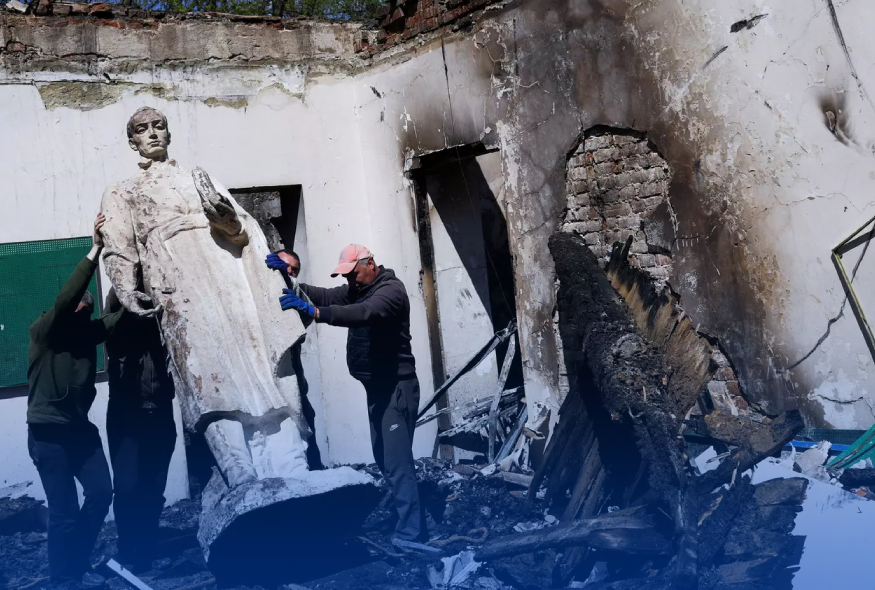
This is how Oleh Slabospytskyi, a friend and community activist, describes the craftsman and veteran. The two Oleh’s met in 2011 when they joined the activities of "Heroika," a charitable foundation that restores monuments to the soldiers of the Ukrainian People’s Republic (UNR) and the underground resistance. Oleh Sobchenko found information about the foundation himself, wrote to the founders, and volunteered to help. As a craftsman and carpenter, he installed monuments in various parts of Ukraine, created designs with his artist wife, researched history, and involved local residents in the work.
"Oleh didn’t create these monuments just for the sake of it—he empathized with each story he worked on," Slabospytskyi says.
"If the monument was about a specific battle—for example, the UNR army against the Bolsheviks—he would take an interest in the archival documents. He would visit the battle site and try to engage in conversations with the locals."
"Oleh didn’t need to be asked twice to help with a monument," he continues. "For him, the motivation to honor those who died for Ukraine was enough to do his utmost."
I look at one of Oleh’s last works: it is a tall marble wall resembling a majestic mausoleum. In the center is a Petliura cross with laurel wreaths on either side. Above is the coat of arms and the inscription "Pro Patria," or "For the Fatherland."
Oleh worked on this monument for half of the spring and summer of 2021 in the village of Velyki Zozulyntsi in the Khmelnytskyi region. He was there almost all the time, with only short trips home, building a large memorial from scratch with the help of local residents. Over a hundred years ago, Soviet occupiers executed UNR soldiers there and buried their bodies in a large pit. Those heroes lay there for nearly a century until they were reburied according to Christian traditions.
The monument was unveiled on Independence Day in 2021, during a time of relative calm when Oleh could and did find time for activism and art. Just a few months later, Russia would launch a full-scale invasion, and Oleh would head to Kyiv to defend the Fatherland.
Friends say he had plans for new monuments, many ideas for promoting Ukrainian history, and continuing to fight for his beloved river. All these plans were set aside with the onset of the full-scale war.
"Oleh played a key role in defending Kyiv at the beginning of the full-scale invasion," says Ihor Lutsenko. "At one point, he took command of defending a strategic site at the dam near Kyiv. Had the Russians been smart enough to capture it, I don’t know if we could have held that area, maybe even the capital. There were very few of us, but thanks to Oleh’s natural leadership, we managed to drive the Russians away."
In the early days of the great war, Oleh joined the 72nd Black Zaporizhian Brigade and became an aerial reconnaissance operator. His call sign was "Chornyi" ("Black"). He fought in all the hotspots until January 24, 2023. Oleh was 49 years old.
***
"When Oleh died, the Black Zaporozhians lit fires. They brought a tulumbas, an ancient drum used in battle by the Cossacks Zaporizhian Sich, and beat it when the coffin was carried out of the church. They escorted Oleh to the cemetery to the sounds of his favorite Ukrainian songs," says Olha. "They also placed a red kytayka on his face according to Cossack tradition."
Olha is convinced that Oleh knew and felt the forces of nature and was of Cossack lineage. All this fueled his love for freedom, strong-willed nature, determination, and persistent fight against injustice.
Oleh was buried in the Alley of Heroes in his native Korsun. His wife designed a memorial plan for fallen soldiers based on his sketch; he’d intended to establish such memorials throughout Ukraine. It is currently in the planning stages and relatives want to erect Oleh’s monument in the summer of 2024.
Relatives are also collecting memories of Oleh to publish in a book. Oleh’s daughter is preparing illustrations. A monument to Oleh and other defenders was unveiled in Kholodny Yar in Cherkasy region on the holiday known as the Intercession of the Theotokos in 2023.
"Oleh became a legend in his lifetime," Olha shares. "I was amazed at how one person could simultaneously do so many useful things for society. Activism, the river, history, war... If everyone did the same, we would have long since defeated the enemy."
Even during full-scale war, Oleh talked about the pain of losing his brothers-in-arms. He confided in his friends about the alienation he felt when he saw how some of the country’s best people were dying.
"Oleh took the loss of his brothers-in-arms hard," Olha recalls. "Once he wrote, ‘I wouldn’t want people to mourn me deeply and for a long time if I’m gone. Because sorrow takes away strength and can lead to despair. I want everyone to be angry, happy, and feel good’."
"I want everyone to be angry, happy, and feel good" are the words carved on Oleh's monument in Kholodny Yar.
This inscription is a reminder that despite losses, we must grit our teeth and not give up. That is what Oleh wanted. His loved ones strive to live as he commanded: to straighten their shoulders, gather their courage, and continue to fight.
Read also:
We need your help to create projects and materials aimed to defend freedom of speech, popularize Ukrainian culture and values of independent journalism.
Your donation means support for discussions, awards, festivals, authors’ trips to regions and PEN book publications.