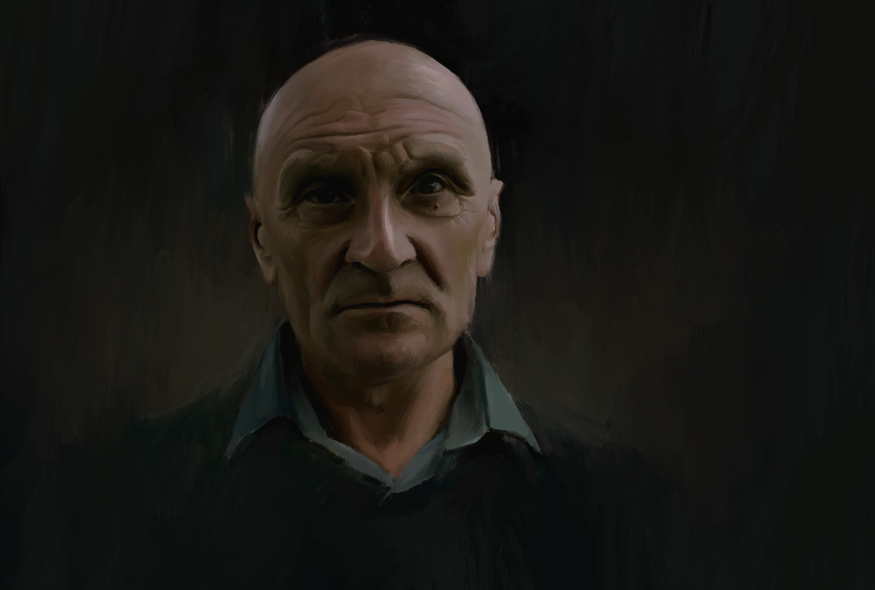
Serhii Myronov: Living History
First, the doors need to be thoroughly cleaned of dirt and mold to prepare them for the restoration process. The next step is to remove the paint that has been applied to the wooden panels at various periods over the past century. But before reaching their authentic structure, the doors must be freed from a dozen layers of thick paint—mostly Soviet-era oil-based—using a heat gun. Each new layer was applied on top of the previous one without cleaning or sanding the doors, which gradually caused their decorative elements, dating from the late 19th to early 20th century, to vanish. Preserving these intricate designs requires considerable physical effort and stamina from the restorer, as sandpaper is used during polishing. After that, an antiseptic is applied to the wooden boards to protect the structure from damage. Then, a primer is applied for reliable adhesion, followed by several layers of weather-resistant paint.
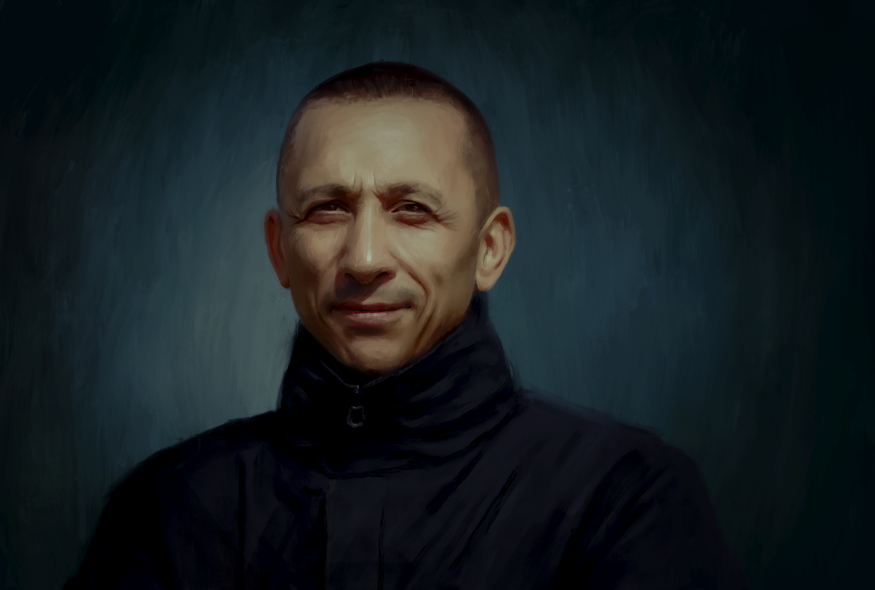
Using this approach, between 2020 and 2022, the entrance doors of buildings constructed before the Soviet occupation of Ukraine were revived in Kyiv’s historic districts. The restoration was carried out by local historian, writer, and researcher Serhii Myronov. Although he wasn’t a professional restorer, Myronov learned the craft through online videos and articles, books, and consultations with experts. He began practicing restoration because he couldn't bear to watch the historic face of Kyiv vanish irreversibly. "History must be preserved—it’s incredibly fragile," Myronov would often say.
The first doors Serhii restored were in an archway on Lypynskyi Street, near the city’s velodrome. He had heard that the residents of building number 9 were planning to brick them up and decided to save them. "At least we’ll try. If we mess it up, we'll know it’s not our path," recalls Oleksandr Borovych, Myronov’s close friend, a military serviceman, and head of the NGO True Kyiv. After more than 30 hours of work and using his own funds for materials and tools, the dirty-gray doors were transformed into a vibrant shade of red, and the residents changed their minds about getting rid of them. "Serhii also installed an authentic handle, apartment numbers, and doorbells. The place became popular—people started coming by to take photos. That’s when we decided it was worth continuing," Oleksandr says.
Myronov shared his volunteer work on the blog Vanishing Kyiv, which he started with Oleksandr Borovych. Several years before he began restoring doors, Serhii used the blog to publish stories and articles about the historic corners of the capital. The Instagram page gradually gained followers eager to learn about Kyiv’s past and immerse themselves in the local historian’s writings.
"Serhii had a distinctive style, something his followers often noted. In addition, my brother wrote three books, each set in Kyiv, where the city itself plays a significant role," says Varvara Ogloblina, Myronov’s sister. "He could work on his stories non-stop, often until morning. Unfortunately, his works were never published in print. Serhii wrote all his texts in Russian, so we plan to translate both his books and the Vanishing Kyiv posts into Ukrainian and publish them."
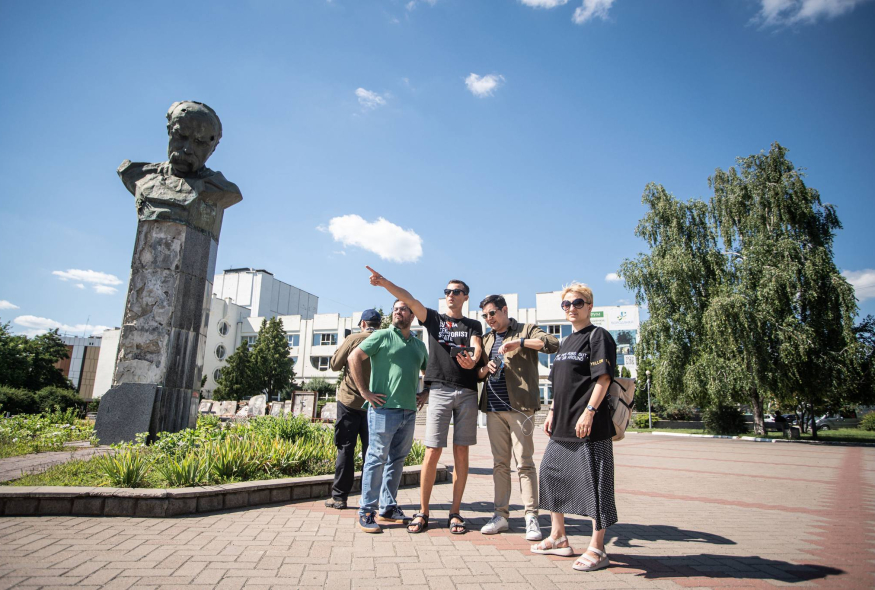
Serhii’s storytelling extended beyond text—he also organized city tours. When speaking with Nelli Chudna, curator of the NGO True Kyiv, I mentioned that I had followed Myronov on Instagram but never attended one of his tours.
"It was very hard to get a spot," Nelli smiles. "There were so many people interested that registration closed within half an hour of the announcement." She adds that Serhii could get carried away, and the planned two-hour tour would stretch into five. People didn't want to leave. Serhii would show old photographs and share stories of Kyiv’s residents from centuries past.
"He mostly told stories not about the architectural features of the buildings, but about the lives of the people, like ‘Here, daring thieves robbed a wealthy man in his own apartment, and over there lived a city inventor. Here’s a can of oil that was used in the 1890s, and here’s a perfume bottle that Kyiv women used in the early 20th century.’ History came alive—it was as if you were watching a film, and that captivated people!" says collector Pavlo Tretyakov, a friend of Serhii.
Before the tours, Serhii would often clean particularly neglected corners of Kyiv, including scrubbing the authentic floors of entryways. He was just as passionate about restoring the interiors of these entryways as he was about restoring doors. From his personal collection of antique tiles, he even planned to "repair" the original floors in some of the city’s buildings.
***
Front doors are something that dozens, if not hundreds, of hands touch every day. They serve as landmarks, whether as the starting point or the climax of a journey, drawing attention and often becoming catalysts for significant change. Behind those doors lies a wealth of fascinating details: intricate century-old tile patterns, rare glass ceilings in entryways, and murals on the walls. All of this needs preservation—every inch carries its own story. But to uncover Kyiv’s hidden tales, you must first touch its façade.
The chain reaction that Myronov set in motion worked: Kyiv residents began noticing that elements of buildings they were used to seeing in slow decay were becoming beautiful again. As a result, people started to change how they viewed their own homes. Initially, many residents were skeptical and cautious about Serhii’s volunteer work. However, after the first successful restorations, locals began to get involved. Some contributed materials, offered access to electrical outlets, or simply brought coffee. Neighbors began asking Myronov to "save" the entrance structures of their own buildings. Many volunteers came from the followers of Vanishing Kyiv.
But Serhii didn’t stop there—he aimed to unite the efforts of concerned Kyiv residents in preserving the city’s historical heritage. This led to the founding of the NGO True Kyiv in 2021. Today, it includes more than 600 activists who continue Myronov’s work.
***
Serhii stood in defense of Ukraine from the first days of the full-scale war, joining the Territorial Defense Forces (TDF) of the Ukrainian Armed Forces as a volunteer. He served in the 241st Brigade, 243rd Battalion, 3rd Company, and was appointed as the senior sergeant performing the duties of platoon commander. In October 2022, he was deployed to the combat zone near Bakhmut. On November 11, his platoon was tasked with a reconnaissance mission.
"It was extremely dangerous—the area was under constant fire," says his sister Varvara Ogloblina. "My brother took responsibility for the decision to go alone, to protect the lives of his men." Three comrades accompanied Myronov. On their way back, they came under an airstrike. Serhii and another soldier were fatally wounded. Serhii passed away on November 16 at a hospital in Dnipro.
Varvara shares that her brother was highly principled. When the family asked him at the end of February to reconsider his decision to volunteer, he replied that it was his choice and it was not up for discussion. "He was a man of conviction. When he heard suggestions that he should transfer to a safer position, he would firmly respond, ‘And who should take the dangerous spot instead of me?’"
Serhii’s knowledge of foreign languages and his habit of thoroughly researching anything that interested him proved useful in the military—he sought out and ordered the best equipment for his comrades. His friend Oleksandr and his sister Varvara also believe that Serhii sold part of his personal collection to buy the necessary gear for the front.
During his service, Myronov continued to share his observations and feelings on his blog, writing about the war, Kyiv, historical buildings, May—the month he loved so much—and his golden retriever, his best friend whom he nicknamed My Heart, or simply Mai.
"It was an absolutely touching love," smiles Varvara. Mai attended a canine school and knew all the commands. When the dog was ill, Serhii would sit with him during IV drips. In September 2021, when Mai could no longer walk, Serhii carried him down to the yard several times a day from their apartment on the fifth floor, with no elevator.
"A great feeling still lives within me," Serhii wrote in Disappearing Kyiv about his dear companion in their tireless and endless journeys around the capital, when Mai passed away. "A feeling of gratitude for the years we spent together. For all the wonderful memories and probably the best moments of my life. For the warmth he gave me and the fur he shed. For the sand on his paws and his loud panting. For the morning walks and evening strolls. For the connections made thanks to him. I loved him so much, my retriever, My Heart…"
***
House number 2 on Nahirna Street is enveloped in greenery. The doors and windows are wide open, with translucent pink curtains fluttering in the June breeze. Today, it hosts the Salon of the Frames—an exhibition of old photo frames from Pavlo Tretyakov’s collection. Around the house and inside, dozens of people gather, including volunteers from the NGO True Kyiv and attendees of the exhibition. Newcomers are invited to tour the house and learn about its history, as it was built in 1909. I join the group and, in one of the rooms, see a large photo of the smiling Serhii Myronov.
He loved this house deeply, dreamed of restoring it, and knew its owner, inventor Mykola Tumarkin. "A few years ago, we came here in the evening and suddenly saw that lights were on behind the closed shutters. We looked at the building, guessing what the interior and furnishings might be," says Pavlo Tretyakov. "Then Mykola Valerianovych opened the door and invited us inside. Serhii and I were amazed by the authentic features we saw: oak credenzas, a rare early 20th-century refrigerator, and pre-revolutionary book editions."
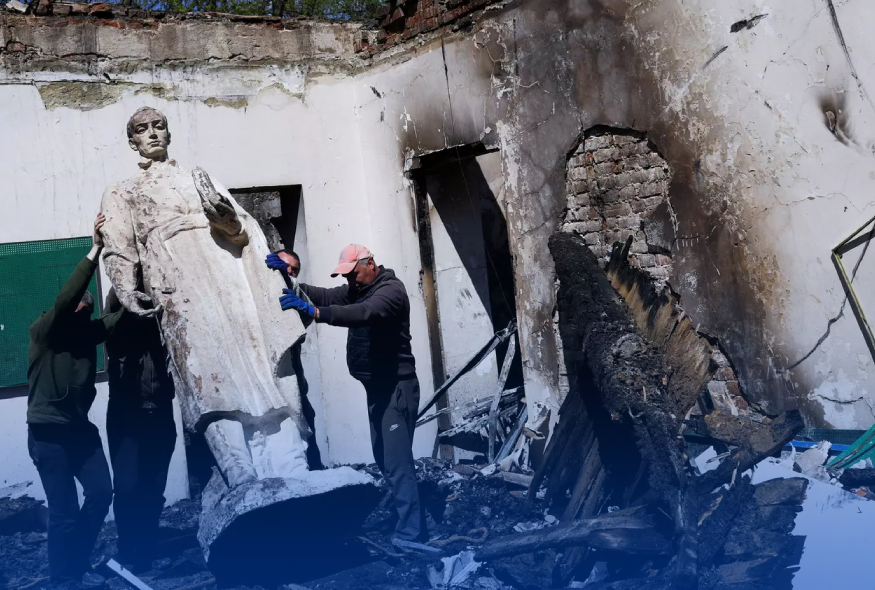
Now, with the owners’ consent, volunteers from True Kyiv, founded by Serhii, are restoring the house. Following a Russian missile strike in the spring of 2024, enemy fragments damaged the door frame and windows.
The century-old estate also serves as a physical space for the NGO, hosting regular educational and cultural events. People connect through social media groups and organize clean-ups to preserve Kyiv’s cultural heritage together.
Everything is unfolding as Serhii envisioned.
"When we visit buildings where Myronov did restorations a few years ago, residents still remember him," says Nelli Chudna. "I’m from Donetsk and met Serhii on one of the tours he organized. My love for Kyiv is largely thanks to him. Serhii Myronov had a unique ability to bring people together around himself and the cause he believed in."
Read also:
We need your help to create projects and materials aimed to defend freedom of speech, popularize Ukrainian culture and values of independent journalism.
Your donation means support for discussions, awards, festivals, authors’ trips to regions and PEN book publications.