Anton Derbilov: A Master of Cossack Victories
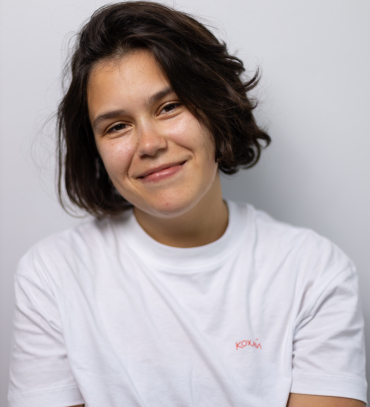

"Well-known in narrow circles" is how Anton Derbilov, the Kharkiv master of miniature sculpture, liked to joke about himself. But this self-deprecating humor hardly does justice to his reputation, as Derbilov was a renowned artist both in Kharkiv and abroad.
"Anton had a vibrant personality. Sometimes a student takes a course and fades from your memory when it’s over, but that wasn’t the case with him. He was unforgettable," says Oleksandr Demchenko, a sculptor and lecturer at the Kharkiv Academy of Arts. Derbilov’s sculptures of historical figures and warriors, anthropomorphic heroes, and fantastical creatures have been featured in documentaries and numerous exhibitions in Ukraine and around the world. Collectors everywhere admired his work.
"Everyone in the community of miniature sculptors knew Anton Derbilov," says Kateryna Derbilova, Anton’s wife, with confidence.
According to Kateryna, her husband engaged in a wide range of artistic activities. He was involved in graphic design and drawing, studied oil painting, danced flamenco, sang, and played guitar and baritone ukulele in the band Alcohol Ukulele. But his greatest devotion was to miniature sculpture, a meticulous and precious craft to which he devoted his life.
The Derbilov family’s artistic pursuits were interrupted by the great war. In the early days of the Russian attacks on Kharkiv, Anton went to the military enlistment office. His wife Kateryna and their daughters Anya, Oksana, and Sonya joined the volunteer headquarters. Derbilov felt that he could no longer remain an artist during the war and consciously abandoned this role. His wife shared this sentiment, not wanting to shoulder the burden of their experience into her work.
However, one day, Anton had the opportunity to at least talk about his work. In August 2022, on an episode of The Sprue Cutters Union, an English-language podcast about miniature sculpture, he enthusiastically discussed with the host the techniques and processes of creating miniatures. Eventually, the host’s voice grew tense, and he asked the sculptor about the war.
"Our city is now a fortress on the border with barbarians," Derbilov said.
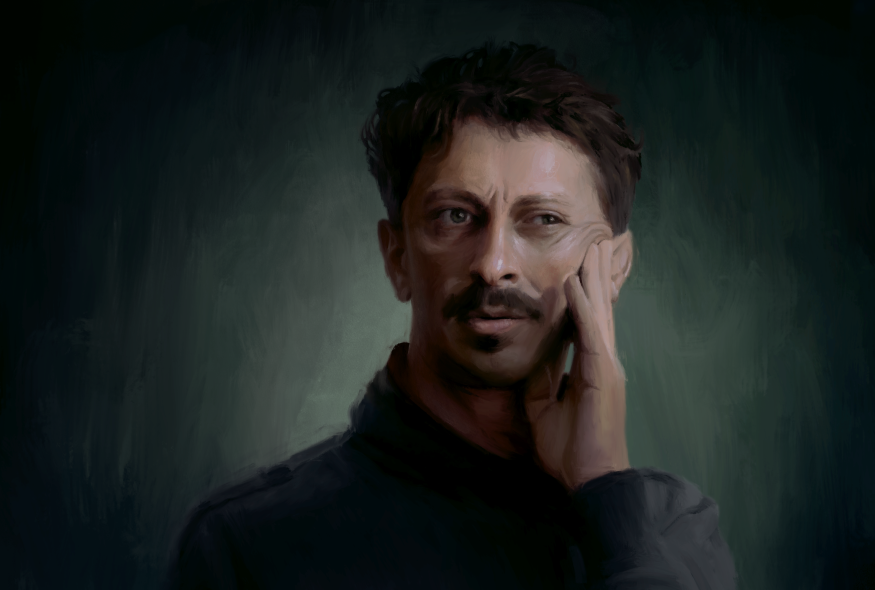
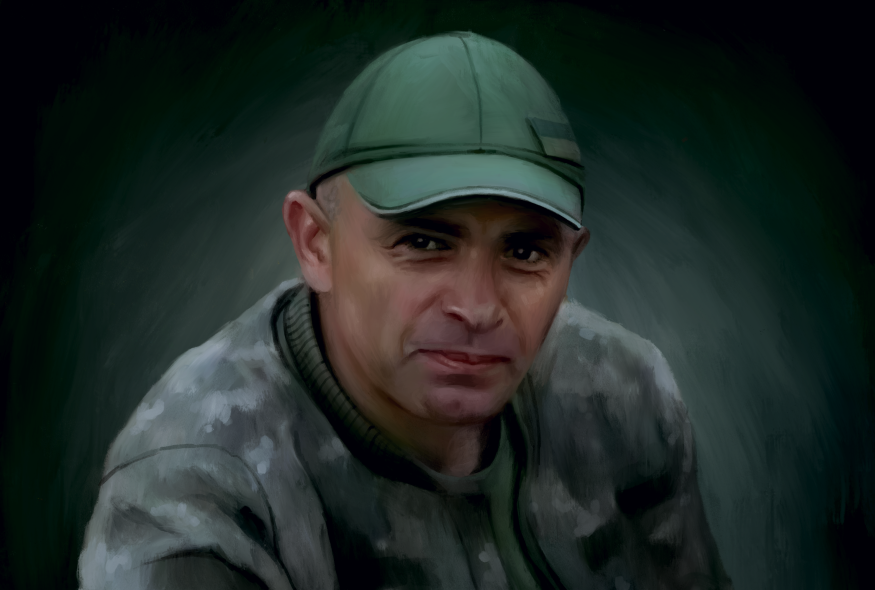
During his year of service in the National Guard of Ukraine, Anton began to resemble his Cossack heroes: he cut his hair short and grew a long mustache. He was involved in the defense of Kharkiv’s outskirts in the spring of 2022 and in the liberation of the Kharkiv region from Russian occupation forces in the fall. Anton Derbilov, known by his call sign Patrick, fought his last battle on April 6, 2023, in the Luhansk region, near Kreminna.
**
From a young age, Anton was drawn to the world of miniature sculpture. Born in Zaporizhzhia, he loved wandering around Khortytsia Island, an ancient place of power where his imagination was filled with stories about the Sich and the Cossacks. Like all children, Anton role-played military campaigns and battles with toy soldiers. But Anton’s case was exceptional: he was captivated by the smallest details of the figures, and eventually, he began creating his own.
Anton made his first attempts at sculpting in his father’s workshop. His father, the sculptor Anatolii Derbilov, taught him the basics, like how to hold tools and make frames for sculptures. Over time, the difference in their approaches to art became apparent, but the techniques learned from his father played a significant role in Anton’s development as a master of miniatures. After graduating from the art lyceum, Anton decided to attend the Kharkiv Academy of Arts. There, he caught the eye of a family friend, the sculptor and teacher Oleksandr Demchenko.
"I immediately realized that sculpture was his path. His eye for detail and proportions didn’t need much explanation. Anton grasped everything instantly," Demchenko recalls.
At the academy, Derbilov excelled in working with stone and creating large-scale sculptures, yet his passion lay in smaller forms. Anton’s later experience at a jewelry factory, where he deepened his knowledge of casting and forming, significantly influenced his future work.
"Miniature sculpture is the only thing I do professionally. Everything else is just a hobby," the craftsman told The Sprue Cutters Union podcast.
Sculpture begins with an idea, and Anton was always fascinated by the Cossack era. His academic thesis was about these legendary warriors, and he and his wife founded the family miniature studio Sirko Toys based on their images. Kateryna and Anton would sit together at a work table covered with stacks of drawings and books, surrounded by shelves of figurines, discussing ideas and sketching designs.
This was followed by hours of meticulous work on the miniatures—each one unique. Anton worked with plastic, while Kateryna painted the pieces. Behind each ten-centimeter-long figure lay not only craftsmanship but also the deep knowledge Derbilov possessed. He was well-versed in military history, the intricacies of uniforms, and combat skills. To understand how soldiers held their weapons and behaved in battle, he learned fencing and hand-to-hand combat and practiced airsoft every week.
**
In spring 2014, the Russian army invaded the Donetsk and Luhansk regions. Many friends left the airsoft team and went to the front. Anton wanted to pack a big backpack and follow his friends, but his duty as a father outweighed his desire to join the fight. He knew his three young daughters needed him.
But throughout the eight years of the war, Anton couldn’t shake the feeling that he had "wasted his time." He volunteered but only found solace when he felt the cold metal of a gun in his hands. During the defense of Kharkiv, he realized that remaining an artist in the army would be psychologically impossible.
"What’s happening around us is not meant for artists," said the sculptor, who consciously set aside everything he had been doing before the great war.
The scorching summer near Balakliia ended with a large-scale counter-offensive conducted by Ukrainian forces.
The National Guardsmen were the first to receive the joyful embraces and kisses of the liberated people in Izium, Pidlyman, and Borova. His unit faced the enemy at close range for the first time in the liberated Antoniv but successfully repelled several tank attacks.
The front brought even more challenging times. In late November 2022, the soldiers endured freezing cold, hunger, and thirst near Kreminna. Despite these hardships, Anton never complained. He even joked often in his social media posts: "The Guard is not just about parades and balls, I tell you!" and "The orcs have prepared a diverse entertainment program with a fire show." Surrounded by scenes reminiscent of Brueghel’s winter landscapes in Slobozhanshchyna, he longed to cook breakfast for his large family.
After a tough winter, the Derbilovs hoped to regain some semblance of normalcy. Anton was scheduled to be transferred to Kharkiv in the spring. However, this transfer was postponed. "We were waiting for him to return. But not under such circumstances," Kateryna Derbilova recalls.
The interior of her car is adorned with chevrons, one of which reads "Patrick." Anton’s call sign was chosen from his historical reenactment days back in the 1990s. Each week, Kateryna visits the Alley of Heroes in Kharkiv, where hundreds of Ukrainian flags sway in the wind. She sits on a tourist mat in front of Anton's grave, finding solace "among her own."
Kateryna is certain that she and Anton shared a unique bond. They met at an art lyceum when they were just fifteen and remained best friends throughout their lives. Anton was killed on Kateryna’s birthday.
"So that I wouldn’t be alone on that day," she reflects.
Read also:
We need your help to create projects and materials aimed to defend freedom of speech, popularize Ukrainian culture and values of independent journalism.
Your donation means support for discussions, awards, festivals, authors’ trips to regions and PEN book publications.