Oleksandr Menshov: A Writer Who Created History

"The last time I spoke with Sasha was on November 14, 2023," Liudmyla tells me. "It was the 20-year anniversary of our marriage. After our conversation, he said he was going to his position. We haven’t spoken since. He died on November 17."
Liudmyla Menshova talks about her husband, who died near the village of Klishchiivka in the Bakhmut direction. He defended Ukraine there as a junior sergeant of the 22nd Separate Mechanized Brigade. In peaceful times, Oleksandr was a writer who loved and studied his native Kherson and wanted to describe his wartime experiences. But he didn’t have the chance to do so.
His last book, Me, Fox, and the Occupation, was released a week after the writer's death. It's a diary of life in Kherson during the first months of the war. On the cover are photos of Oleksandr's daily life during the occupation, and also Fox, the family pet who inspired the book's title.
Fox interrupts our conversation with Liudmyla. While Liudmyla recounts how she found out about her husband's death, Fox comforts us in the most difficult moments with his purring.
"Sasha loved Fox very much. He loved animals in general," shares Liudmyla, while the cat purrs near her. "When we fled occupation, I suggested leaving Fox with my parents, but Sasha was against it. He said, 'No, he's a family member.' And so Fox traveled with us all the way to Vinnytsia."
The family settled in Vinnytsia after leaving occupied Kherson. It's where Oleksandr found a job, enlisted, and went for military training to defend Ukraine. He didn't want his family to worry about him on the front lines. He told his wife that he was on the third line of defense, though in reality, he was in the active combat zones. Oleksandr’s brothers-in-arms later told Liudmyla that Tavryk –– that was his call sign –– wasn't afraid to go to the most dangerous points and took great care of younger soldiers.
He didn't write while at the front but had plans for new works. The writer also kept track of what was happening in Ukrainian literature during the war.
"He dreamed of his books being read," says Lyudmila. "He said, 'I want my books to be in libraries.' And he distributed them, even when we were under occupation."
"And he never stopped believing that everything would be okay," she adds.
***
Oleksandr always loved reading. As a child in Kherson, while his peers were riding bicycles or playing soccer, he would go to the library. Once, he even tried to borrow academic literature, but didn’t manage to. The local librarian couldn't understand how a ten-year-old child could read adult books, so she wouldn't let Oleksandr take them. Later, the writer said that he would have liked to work as a librarian himself and to be surrounded by books.
Shortly before his death, Oleksandr made his final gift to his loved ones from the front lines, despite having almost no internet — he bought a children's book for his little nephew. According to the writer, a book was always the best gift. He’d left behind a huge library in Kherson, which the family planned to return to after the war.
Liudmyla recalls that her husband had been writing since she knew him. A "techie" with a degree in mechanical engineering technology, Oleksandr found time for writing both when he worked as a process engineer and later when he moved into commerce and sales. His topics were the alternative history of Ukraine, detective stories, and finally, reflections on the war and occupation.
"Sashko has a book called Reprints of Unfinished Drafts. It's about World War II, about the occupation of Kherson," recalls Oksana Pohomii, an activist and volunteer from Kherson who knew Oleksandr well.
This book unfolds an alternative history of the 1940s. Oleksandr wanted to show what the underground struggle for the restoration of Ukrainian independence was like in the Kherson region. Although the story is fictional, the writer supported it with real documents, like Ukrainian-language newspapers from the wartime period. To do this, Oleksandr spent a long time studying the era and working with archives in his hometown, as well as in Germany and Hungary.
"I remember how Sasha sat at the computer translating from German," recalls his wife. "He found information that showed the true history of Kherson, not the Russian version of it. People were amazed at how Sasha managed to find all this."
Even during the occupation of Kherson, Oleksandr continued to read historical documents and memoirs about the interwar period to better understand how Ukrainians lived through the bloody periods of the twentieth century, as well as how to survive the current Russian war. He then recorded his reflections in a diary, which became the writer's last work.
Oksana Pohomii notes: "His books are complex literature. They make you think and draw interesting parallels between the past and the present."
***
"When the occupation of the city began, Oleksandr was one of the first to write to me and ask if any help was needed," says Liliia Vizhichanina. She works at the Kherson Scientific Library, where she often invited Oleksandr for literary meetings. He met with readers there and brought his children, who were also eager readers.
During the occupation, Oleksandr stopped going to work and tried to write, but at first, nothing came out. Only after a few weeks did he recover from the initial shock and then began making notes about the daily life under occupation. At that time, Russian soldiers were hunting down Ukrainian activists in Kherson. Among the biggest enemies of the occupiers were members of Plast, the largest Scouting organization in Ukraine.
Plast appeared in Kherson a few years before the full-scale invasion, and when Oleksandr learned about the new center at the Kherson Regional Library, he immediately brought his youngest daughter there. He constantly participated in the organization's activities, wrote historical publications for the website, and was one of Plast's greatest friends in the city. During the occupation, many members of Plast couldn't leave the city, so Oleksandr helped them by delivering food, skillfully bypassing Russian checkpoints.
"We stayed under occupation for half a year," recalls Liudmyla. "We decided to leave because we understood that the children needed to study, and under occupation, the education was only in Russian. I left my job because we didn't want any salaries in rubles. We left the city in August 2022."
"We want there to be more places in Kherson where the community can gather and read Ukrainian works," says Oksana Pohomii. "We already have a large library with Oleksandr's books and manuscripts. That's why we want the center to bear Oleksandr's name, as he loved Ukraine and our culture so much."
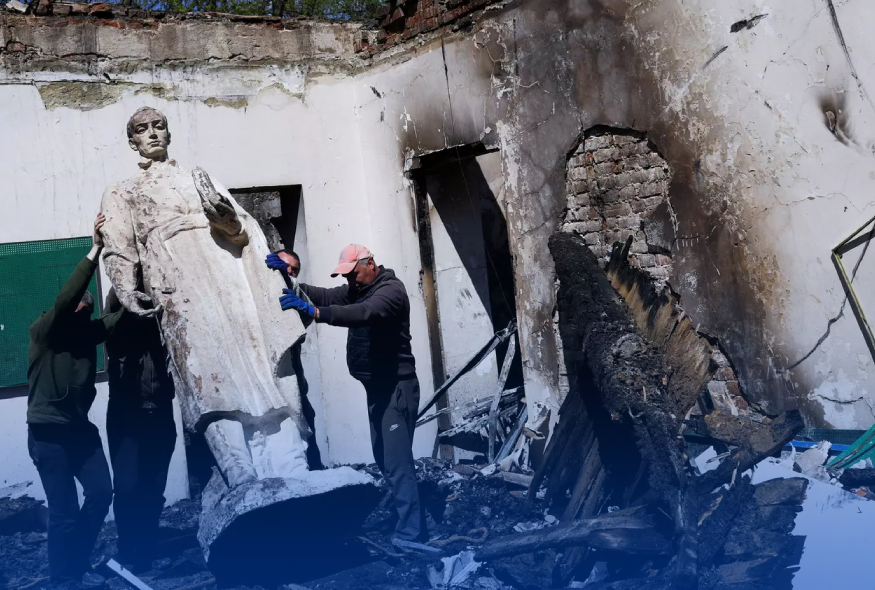
Five days before his death, Oleksandr posted a photo of the destroyed scientific library in Kherson which he had visited so often. That day, the Russians had almost completely destroyed the library.
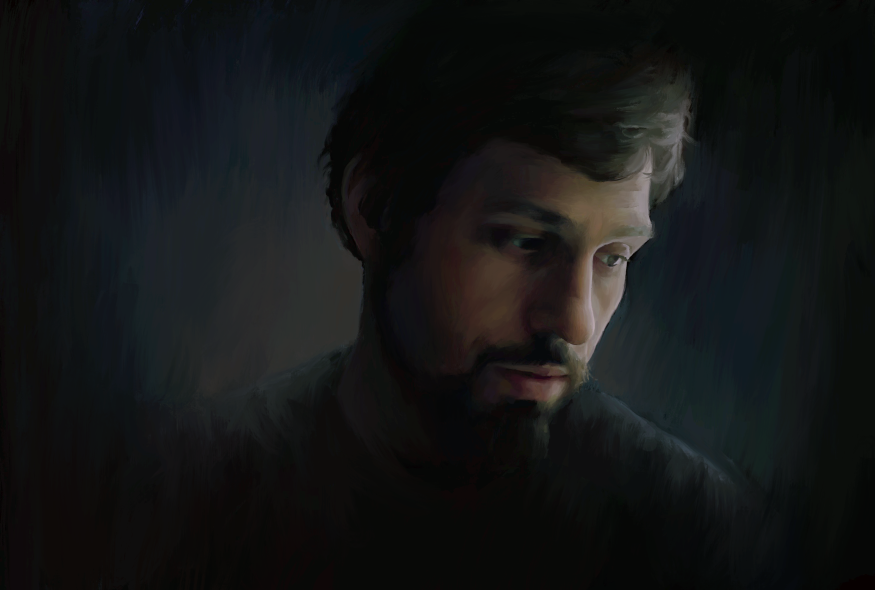
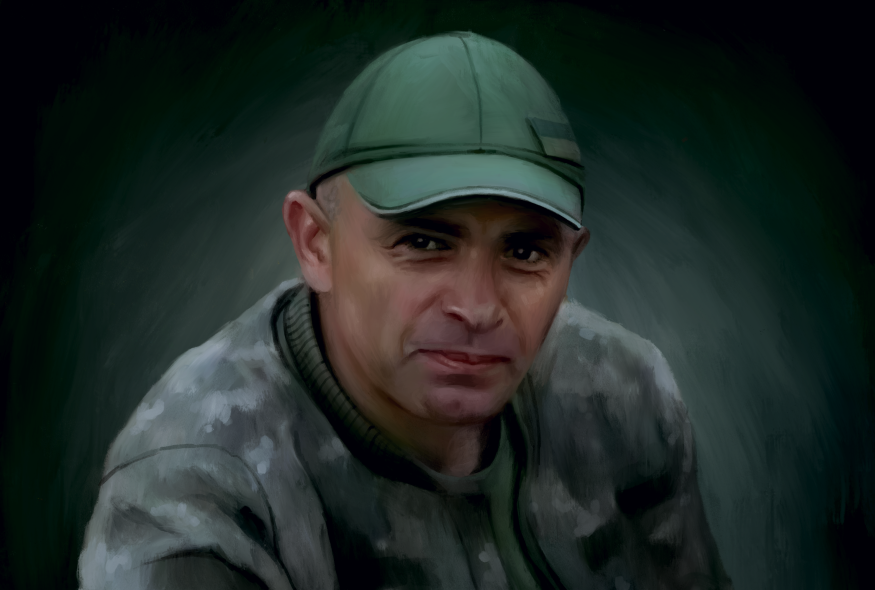
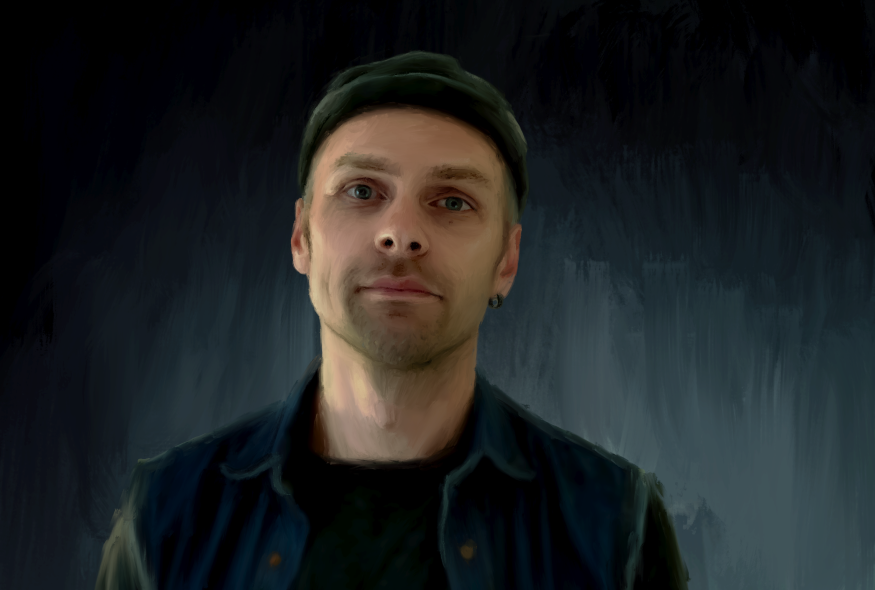
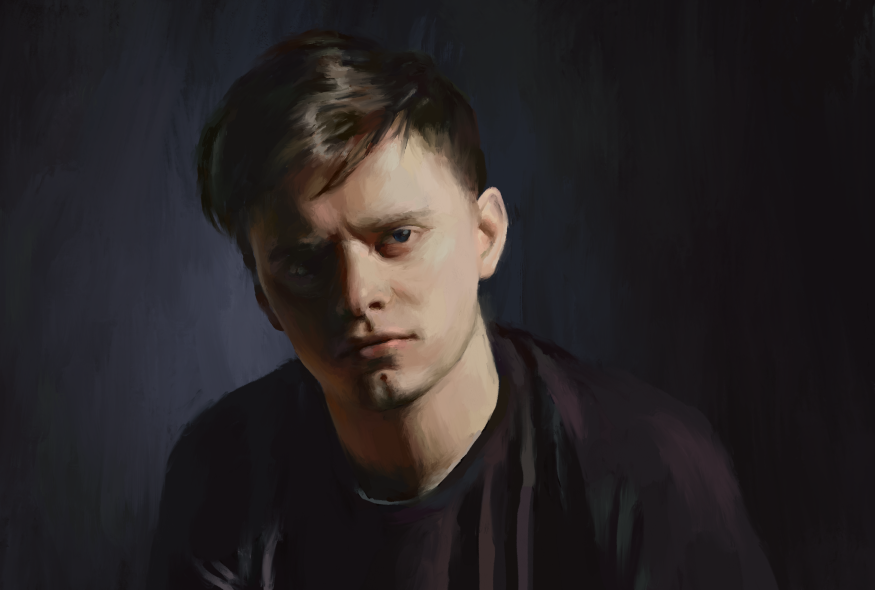
A few minutes after that post, Oleksandr made his last post on Facebook – a selfie from a dugout in Donetsk. In the photo, he appears still young but tired, with a partially gray beard, a gaunt face, and a pensive look in his gray eyes. The photo is without a caption. After posting, Oleksandr managed to speak with his wife to congratulate her on their wedding anniversary. Then he moved to the front lines for the last time.
Read also:
We need your help to create projects and materials aimed to defend freedom of speech, popularize Ukrainian culture and values of independent journalism.
Your donation means support for discussions, awards, festivals, authors’ trips to regions and PEN book publications.