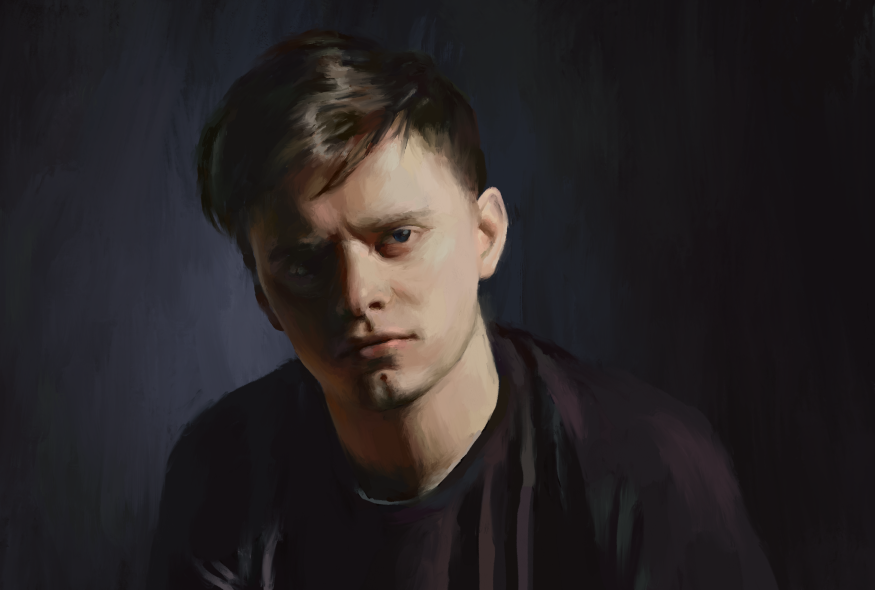
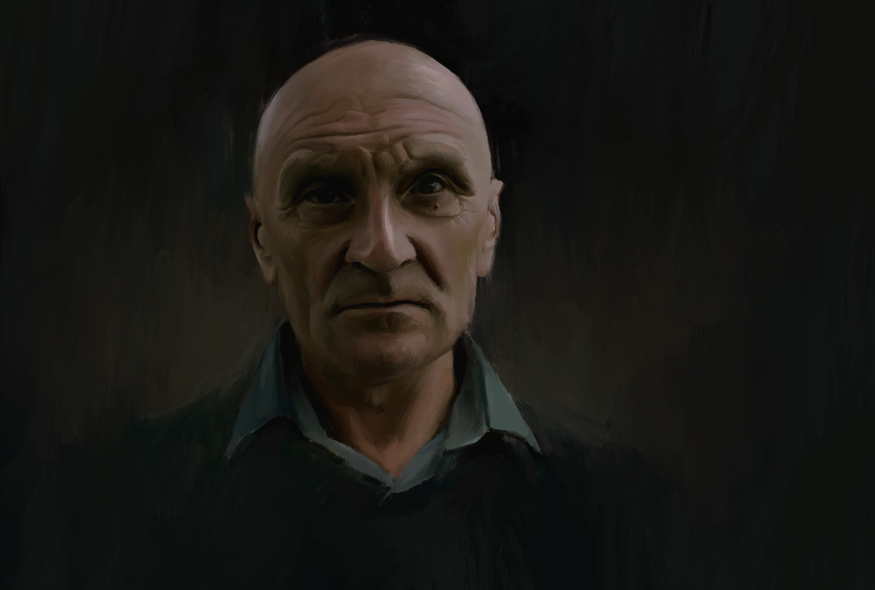
Oleksandr Osadko: Building the Future
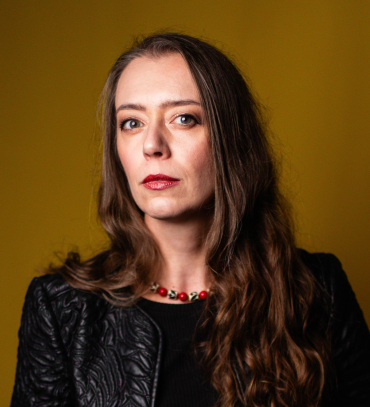
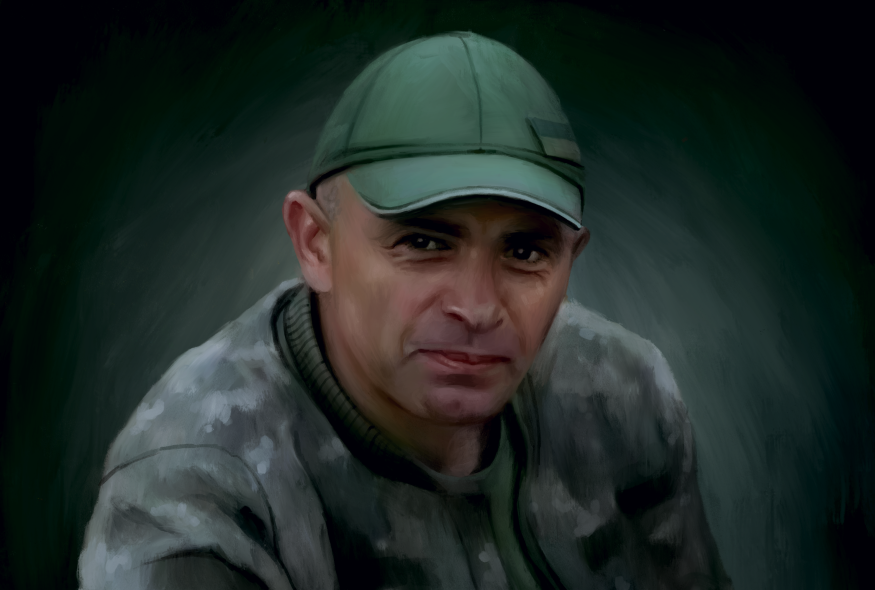
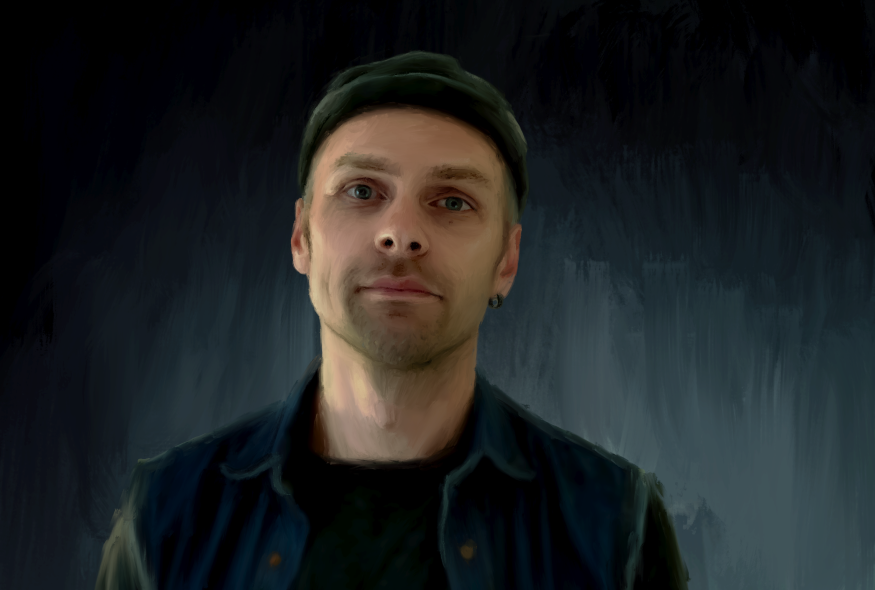
The first time I met Sashko was in 2008 when I visited his wife Hanna, with whom I had recently become friends. Sashko came across as a quiet but very dependable person. His presence immediately gave me a sense of safety, even though there was no real danger in a Ternopil apartment back then.
He, however, sensed the threat right away and was prepared to meet the enemy head-on. "It's easier to light a small candle than to curse the darkness," says one of the characters in his stories. At a New Year's party that brought us into 2022, we discussed the looming threat of full-scale war. Oleksandr had a clear stance: "We have to fight." To defend our people. He already knew what he would do, and he did exactly that. Despite having no military experience, he joined the Territorial Defense Forces the day after Russia launched its full-scale war against Ukraine. Hanna never even considered trying to stop him, knowing it would be pointless. Instead, she was proud of his decision.
Long before the start of the Russian aggression in eastern Ukraine, Sashko confessed to his wife that he had always dreamed of being a soldier, a military man. "Just imagine if I were buried in a military cemetery," he added. He always referred to himself as her guardian, her protector. Sashko's sister, Oksana, recalls that he had almost twenty sets of toy soldiers in childhood, which he would arrange everywhere, modeling battles and devising strategies. However, the Soviet mentality in the then-unreformed Ukrainian army repelled him from pursuing such a path. Later, he would cleverly expose this phenomenon in his story "Zero_Zero_Seven," where the only conscript with good physical training is a foreign spy. Yet Sashko himself was able to perform a pull-up and flip on the bar.
Hanna learned that her husband wrote fiction ten years into their marriage. She had always been the creative one in their family, a writer and an artist. By contrast, Sashko, with his degree in economics, worked as a construction worker for many years to support the family. When he showed his wife his first story, she couldn’t believe it: the writing was so polished that it hardly needed editing—Hanna only made a few minor suggestions.
"I suppose he had all these stories in his head," Hanna says. "You can't come up with something like that in one night—you can only put in writing. Piecing the stories together must have happened earlier. Working on a construction site is the perfect place to think, because your alone with your thoughts while doing monotonous physical labor." Sashko had golden hands: he did all the repairs around the house by himself and converted an old house in Berezhany into a family summer residence.
His captivating stories about the lives of ordinary villagers are rich with brilliant irony and infused with philosophical reflections. Oleksandr skillfully captures the essence of the Ukrainian national character and the realities of the late 2000s. He crafts his characters from real life—people we might recognize among our friends, neighbors, or relatives. They enjoy lively conversations over homemade moonshine and fried mushrooms, share timeless wisdom, and then, with a flourish, twirl their mustaches as they set out to make significant changes, re-educate corrupt officials, or even build spaceships. Isn't it true that we hear tales of ordinary Ukrainians taking down enemy drones with jars or stopping Russian tanks with their bare hands?
Literary portals at the end of the 2000s allowed any beginner to showcase their creative attempts online. On the Gogol Academy, Oleksandr Osadko hid behind the pseudonym "Stakh." Enthralled by his vivid writing style, readers eagerly awaited each new publication. However, Sashko himself did not consider himself a writer and had no intention of bringing his manuscript to a publisher.
"There is not a single negative character in his texts," notes Hanna. "There are foolish and quirky individuals, but they are all good. Because he loved all people just as they were. People remember him fondly because he was always very welcoming and fair. He never referred to children, even the youngest, as 'kids,' but called them 'friends.' This radically changed the tone of the conversation, showing his respect for others."
"He was like a father to everyone," recalls his 20-year-old daughter Sofia. "He was a mentor who could organize groups of children, lead them, show them new things, and tell them stories. Besides my cousins, Yurko and Mario, he would also gather the neighborhood kids along the way."
Hanna remembers being amazed: "Even after working every day from morning till night, he’d still wanted to go somewhere on his only day off. Not to sleep in! As soon as he opened his eyes, he’d check the weather. If it were snowing, they’d grab our hockey sticks; if not, we’d take a football. God forbid he ever canceled even once. Maybe he wanted to feel like a child again."
For Oleksandr, family was the center of his world. His daughter Sofia recalls how her father always paid close attention to her, nurturing her leadership skills. He was principled and uncompromising about education, striving to build a real team among children. He encouraged sports in every way possible, especially for Sofia, and was proud of her achievements in the scouting organization Plast. He cheered her on at all her competitions—whether in gymnastics, free fighting, boxing, or sports tourism—and always led by example.
Mario, his nephew, whom the Osadkos had raised as their own, recalls how, during a school graduation party in the countryside, he was the only one able to light a fire and set up a tent—these skills that impressed his peers. It was all thanks to Oleksandr, who cared for their future by imparting essential survival and self-organization skills.
"He had a system that ran on its own, always working smoothly," Hanna recalls. "There were times when we'd arrive at the village, and the children, still so small, wouldn't need to be told what to do. Each of them would pick up a bucket, gather the rotten apples, and take them to the orchard. Without a word, everyone knew their task. Each of them had a role and a purpose in this system. Under different circumstances, Sashko could have fully realized his potential because he had a sharp mind and a deep understanding of how things worked. He was also creative and physically fit."
An avid library enthusiast, Oleksandr loved history books and could spend hours discussing ancient Assyria or the Punic Wars. Among his favorite books were the prose of Erich Maria Remarque, Anthony Burgess's A Clockwork Orange, but most of all, Roger Zelazny's The Chronicles of Amber. What fascinated him most were people, their inner worlds, the limits of their abilities, and free will. When he saw Hanna’s massive bookcase at her home, he immediately decided she would be his wife. In 2022, they would have celebrated their 25th wedding anniversary.
After years of monotonous work on construction sites, Hanna urged Oleksandr to finally think about himself: "I told him, 'Let's find something that suits you, something you'd love. We could open a pottery or blacksmith workshop, or even start a rural eco-tourism business in the village. This is really your thing, and we could also organize activities for children—you'd be such a great mentor.' But he was always reluctant to do anything for himself, saying, 'I have everything I need, I don't need anything, it's all for you.' But there was a moment when he seemed to wake up. He realized how much time he'd lost and that he needed to start enjoying life."
Then they began traveling together, exploring Rome, Krakow, and Prague. After working as a builder in Rome for several years, Sashko knew the city better than the locals. However, what impressed him most was the beauty of Ukrainian nature. As a family, they went on cycling trips around Ternopil, rafting on the Dnister, and visiting the Bakota Bay and the Khotyn Fortress.
"We were alike on the inside, we didn’t always need to talk, we could communicate just with glances. We also shared common interests, especially our love for the forest and traveling," Hanna says.
"We lived as if we were playing jazz," goes a line from a song by the legendary band Mertvyi Piven—the lyrics are based on Yuri Andrukhovych’s poetry. Oleksandr and Hanna decided to live like dancing tango.
"Tango is a conversation between two souls, just the two of us, one for the other," Hanna recalls. It was Sashko who suggested they learn to dance as if he knew they needed this time, this new level of connection. They performed together for the first time on stage at a dance competition in Ternopil. The atmosphere of complete trust that permeated their home naturally extended to their dancing, as trust is the very essence of tango.
Sashko took his call sign "Tango" from their shared passion. He went to the enlistment office with his best friend, Ihor. Oleksandr served at the front as part of the 105th Separate Territorial Defense Brigade. Later, to reinforce a unit that had suffered heavy losses, he joined the 25th Separate Airborne Brigade as a machine gunner. He admitted to his wife that, for the first time in his life, he truly felt fulfilled and that he had found comrades who were his equals. He had never felt this way before.
His love for people extended beyond that to all living things. "When they were stationed in the Kharkiv region, there was a strike in the village, and it hit a house," Hanna recalls. "Fortunately, no one lived there anymore, but the people had left a cow behind in their rush to flee. The shrapnel hit the cow, and she cried out in pain. Sashko said, 'I can’t bear to hear this. She was covered in blood, her big eyes filled with tears. I sat down next to her and cried, too. We both cried.' Then, he said, 'I had to put her down so she wouldn't suffer.' His voice trembled as he told me this."
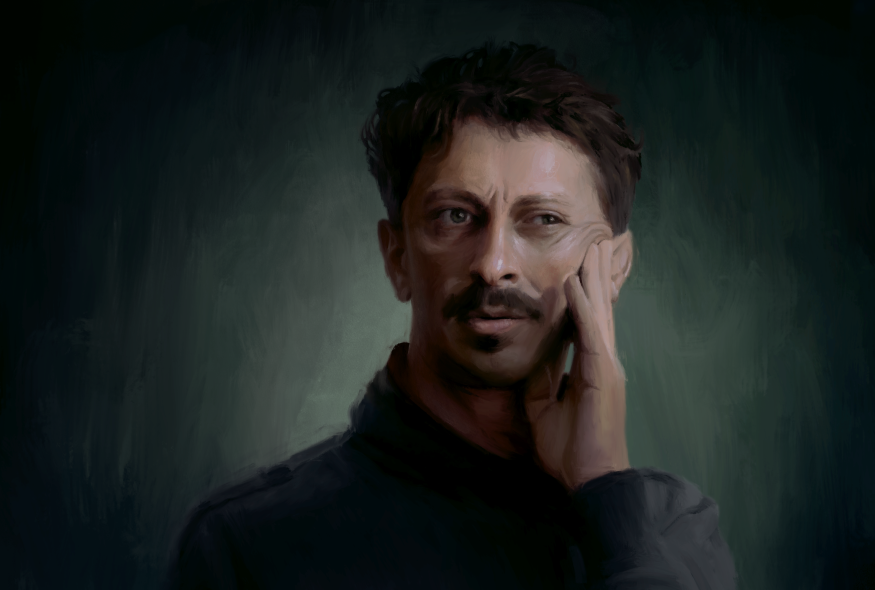
In the dugouts on the hillside, Sashko often carved his call sign and sent home photos of himself next to it. Sometimes, he looked severe and focused with his weapon; other times, he was beside a playful dog with its tongue hanging out. His photos were always signed "Everything will be Ukraine" as his faith in victory was unwavering. He and his wife had planned to dance a post-war tango. To call home, Oleksandr would walk five kilometers from his position to a spot with a mobile signal. His last gift to Hanna was a sprig of wild rose he sent by mail, with the message: "Kissing you, hugging you, loving you."
Sometimes it feels like Sashko foresaw his fate. He managed to do an incredible amount during his lifetime—he realized his potential and fulfilled his purpose. He lived a full life and laid the foundation for the future, like a true builder. With a clear conscience, he imagined himself journeying to the oak forest in Berezhany to meet his father—that’s how he envisioned death.
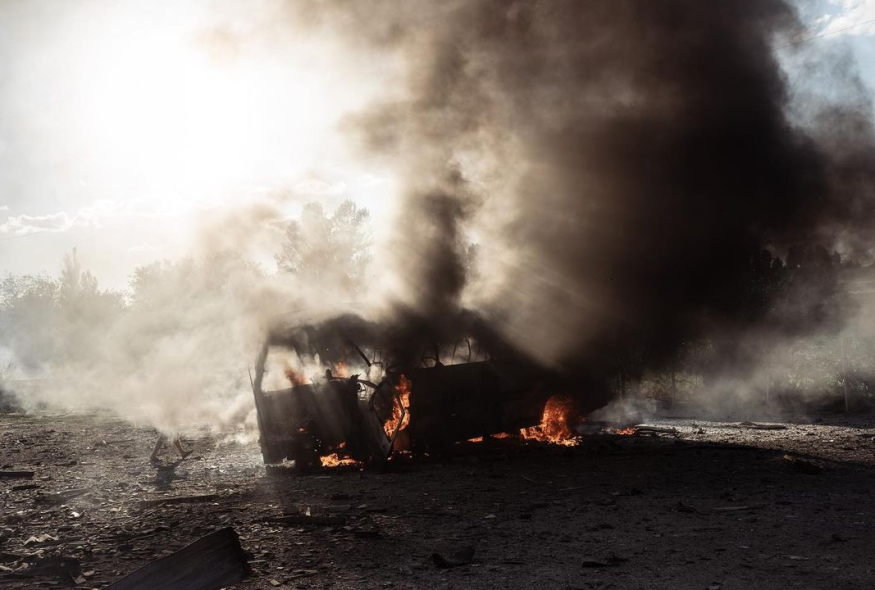
Oleksandr was killed in a mortar attack near the village of Mazanivka in the Kramatorsk district of Donetsk Oblast, on July 9, 2022, his father Ostap's birthday. Russian tanks were advancing; three were destroyed, but they had to take cover from the fourth in the trenches. Oleksandr shielded a fellow soldier with his body, saving his life. In August, the Ukrainian Armed Forces would go on to liberate Mazanivka from Russian occupation.
Ihor, was the first to deliver the devastating news to Yurko Osadko, who, from that moment, suddenly matured. As he put it, he became "his father’s substitute" and took on the responsibility of caring for the family. Yuriy, 24, an architect by profession, now practices his weapon skills every weekend.
Three months after her husband's death, Hanna wrote a children's book titled The Little Oak from the War to transform her experience of loss into a source of healing for others. She understood how unbearably difficult it is for many to articulate the loss of a loved one and explain it to children.
Oleksandr Osadko's book, published posthumously, became a revelation. He had written only seven stories, but the small collection deeply moved readers and critics, making it into all the major 2023 reviews. The book, with its symbolic title To Live, Not to Die, was published by The Old Lion Publishing House, which as a reader he’d deeply admired.
"He would never have believed it," Hanna repeats. "He probably wouldn't have even attended his own book signing. He was always such a shy introvert."
He died when Sofia had just turned eighteen, only a week into adulthood. "Even in that, he fulfilled his sense of hyper-responsibility," Hanna says with sad irony. Now, Oleksandr often appears in Sofia’s dreams, offering her solutions to difficult life problems. And Hanna, who used to get lost in the forest, now always feels his presence there, as if he’s guiding her back to the right path.
Read also:
We need your help to create projects and materials aimed to defend freedom of speech, popularize Ukrainian culture and values of independent journalism.
Your donation means support for discussions, awards, festivals, authors’ trips to regions and PEN book publications.