Sviatoslav Pashynskyi: Love What You Do

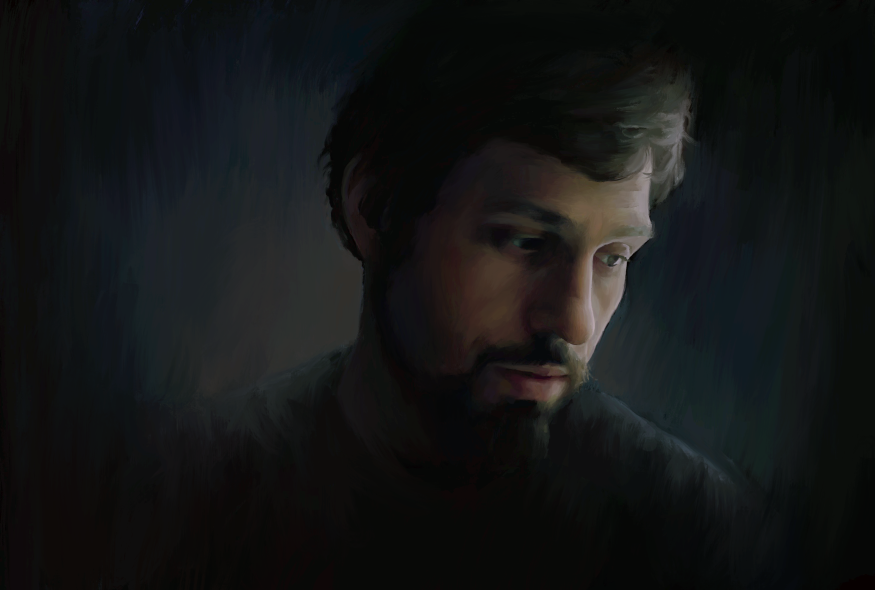
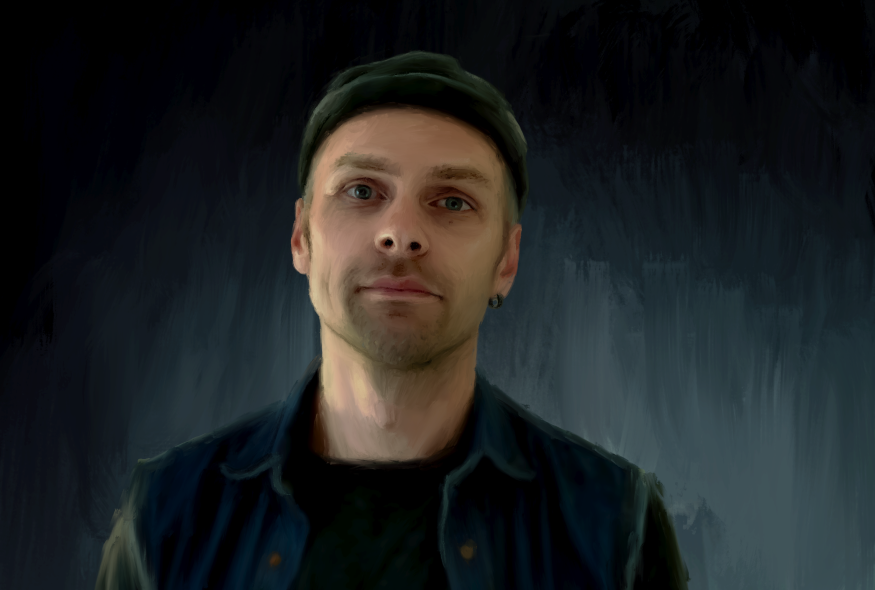
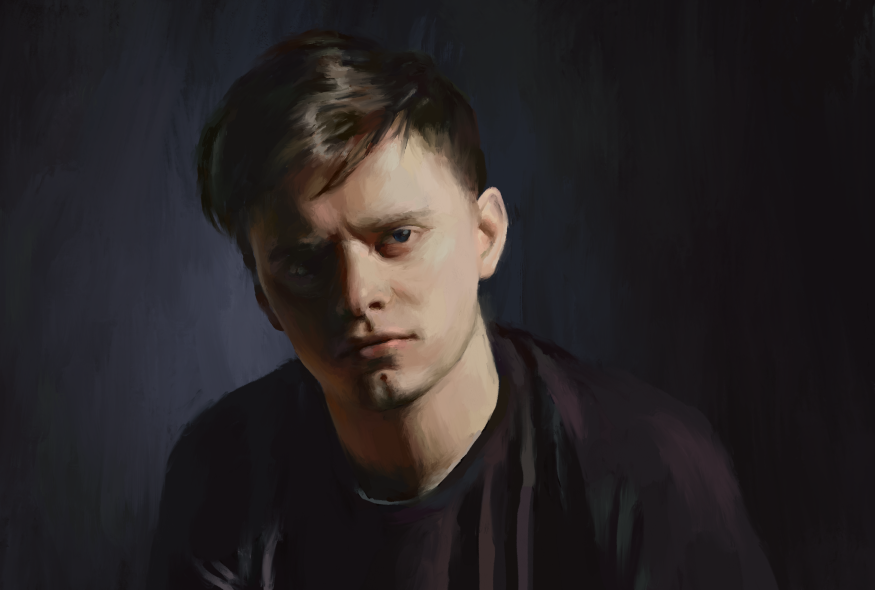
"When I think of Slava," begins ceramist Inna Hurzhii, "I immediately picture his curly, disheveled hair and big blue eyes. That’s how he looked when we studied together in college and university. Over the years, his hair got shorter, but his eyes stayed the same. Slava looked at the world with the openness and sincerity of a child."
Sviatoslav Pashynskyi was a ceramist, sculptor, and teacher at the Poltava Children's Art School. He had extraordinary eyes—light, a bit mischievous, with a hint of good humor at the corners.
"His gaze was so trusting that he could connect with anyone," recalls his sister-in-arms, Natalia Drach. Probably that’s why he got along easily with his comrades-in-arms and, before his service, with the students he taught for nearly twenty years.
"I can’t single out just one memory of Sviatoslav Ivanovych," says his student Liubov Sharipova. "They all blend into one continuous feeling of warmth. I remember how happy I was every time I went to his class. I knew we would have a good time, and that Sviatoslav Ivanovych would always help."
In his classes, Sviatoslav Pashynskyi created an environment that fostered creativity and encouraged trial and error. He had a way of asserting his authority without being judgmental. When he entered the classroom to explain a new topic, he would often start crafting something himself—he couldn’t just sit idle while his students worked. While working, he would become serious, focused, and even stern, but as soon as someone approached him with a question, he would break into a smile.
"He taught us not just about sculpture, but also about loving what we do and approaching everything with a smile," says Liuba. "He had a great sense of humor."
"Sviatoslav Ivanovych loved to joke," adds Daria Bychkova, who studied at the art school from 2012 to 2014. "But he never made fun of us. We always laughed together."
He sensed when his students were upset about unsuccessful projects. He would approach them to offer support and say, "Well, it didn't work out today, what can you do?" His eyes would twinkle so cheerfully that the children couldn’t help but laugh, too.
"In 2014, we were working on our graduation project, sculptures that Sviatoslav Ivanovych was to kiln and give back to us. At some point, he stopped coming to class. Then he returned and told us he had volunteered to join the Anti-Terrorist Operation in the East. But he was very worried that we would stop working. He told us, 'Keep going, I'll come back and kiln your sculptures,'" Daria recalls.
For many students at the Poltava Art School, Sviatoslav Pashynskyi was the first person close to them who went to the front. "I was 16 or 17 years old," Liuba says. "I knew about the war, but I didn't realize how close it was. When Sviatoslav Ivanovych went to the ATO, I realized that the war was here. I always thought of him as a man of my childhood, and his decision to go to war marked the beginning of my growing up."
He joined the 16th Separate Motorised Infantry Battalion and was deployed to the east, near the town of Shchastia in the Luhansk region. The service was both physically and mentally challenging for him But he didn’t complain. When he had the chance, he would take a camera and photograph steppe flowers. Later, these photos became the basis for his clay collection.
In 2015, Sviatoslav returned home. "When I came back from my 'resort' near Shchastia, I reconsidered a lot of things," he said with a smile. "I realized that I hadn't done much for art yet." After resting from his service, he began to bring his creative ideas to life.
Poltava Region, where Sviatoslav Pashynskyi lived and worked, has a rich history of pottery. In the 18th century, about two hundred potters worked in the towns of Hadiach, Zinkiv, and Lokhvytsia, with the first mentions of the famous Opishnia ceramics dating back to the eighth century. The art of pottery has always been held in high regard in Ukraine and was even thought to be endowed with mystical powers. It was believed that the skilful hands of potters could tame the elements and sculpt entire universes out of clay. The work of potters has hardly changed over the centuries. They still sit at the potter's wheel, place their hands on a lump of clay, and shape it as it spins.
This is exactly how Sviatoslav worked. He had a studio in the attic of a small brick house, hidden among thick foliage. The entrance was decorated with his works, including a clay plate, an abstract composition of miniature jugs, and a panel with ceramic flowers. Inside, the small room was lined with shelves up to the ceiling that were filled with jugs, plates, ceramic roosters, horses, and mosaics. In the center stood a potter's wheel, and next to it was an old sofa, where Sviatoslav's friends and colleagues often sat. He was not one to work alone—he enjoyed sharing jokes and treating his guests to tea while creating new mugs. His finger movements and bowed head made it clear he was in love with his work. "If the workshop wasn't closed at night, he would have lived there," his wife Iryna recalled.
"He worked quickly, very quickly—he always had to have something ready by tomorrow," says Inna. "He would sit down, work on the pottery, put it to dry immediately, and kiln it at night. Usually, potters spend a week drying and a week kilning, but he managed to do everything in a day."
Sviatoslav was always busy with teaching at school, making ceramics on request, and spending time with his three sons. But he still managed to create works that later appeared in solo exhibitions and private collections in Canada and Japan.
Sviatoslav used various techniques in ceramics, which makes it difficult to pinpoint a signature style. "I want to show that nothing is impossible," he said. "You just need to do what you love and love what you do." This was the ethos he imparted upon his students. He never forced anyone to conform to a specific style, because his own approach was to experiment and explore different methods.
"There are potters who can work the wheel, and there are those who can’t. Some know how to sculpt, some don't. Some roll out clay and cut out appliqués, while others hand-sculpt leaves and flowers to decorate their pottery. Slava could do everything," Inna notes.
"He was particularly fond of the smoking technique. He would take a finished shard and smoke it with firewood or sawdust. Depending on the smoke, the color of the sherd would change from warm, light tones to dark, blueish hues. Sometimes he smeared the jugs with white glaze, which, when it met the smoke, was covered with thin cracks. He also experimented with the 'raku' technique by firing a shard and quickly covering it with sawdust. He constantly tried new techniques, aiming for the perfect pattern of cracks on glazed jugs and 'living' eyes on his fantastical birds."
He always sought more, whether it was more creativity or more students capable of shaping universes from a piece of clay. In 2018, he received the Yaroshenko Prize for Sculpture, and in 2019, he became a member of the National Union of Artists of Ukraine. He had many ideas for future projects—moresharp-horned bulls, clay sculptures on thin legs, and mosaic Easter eggs. But then came the full-scale war.
"He called me at 10 in the morning, saying he was standing in line at the military enlistment office," recalled his sister, Natalia Drach. Having been to war once, Sviatoslav thought he was ready for anything. He became a rifleman medic and helped evacuate the wounded from the battlefield. Despite his active military service, he continued to teach art classes remotely.
"When Sviatoslav Ivanovych first joined the army in 2014, he told us he wouldn't be able to attend our graduation, but then he surprised us by coming to school on our last day," Daria noted. This time, Sviatoslav Pashynskyi's students also hoped he would return to the classroom and help kiln their sculptures. But he was killed on March 26, 2022, near the village of Novozlatopil, Zaporizhzhia Region.
"Usually, memorial plaques are not made of ceramics. But he was a ceramist; how could I make it any other way?" Inna said about her work, which now commemorates Sviatoslav at the entrance to his school. The image shows him sitting in his studio, head tilted to one side, ready to get to work. Circles extend from his portrait across the blue ceramic slab. Those circles that spun under his hands, returning to traditions and repeating the movements of hundreds of Ukrainian craftsmen. Endless circles that have now come to an end.
In 2014-2015, he served in the Anti-Terrorist Operation (ATO) as part of the 16th Separate Motorised Infantry Battalion. In 2022, he volunteered to join the military again. Sviatoslav Pashynskyi died on March 26, 2022, near the village of Novozlatopil, Zaporizhzhya Region. He was buried in the Alley of Heroes in the village of Zaturyno near Poltava.
Read also:
We need your help to create projects and materials aimed to defend freedom of speech, popularize Ukrainian culture and values of independent journalism.
Your donation means support for discussions, awards, festivals, authors’ trips to regions and PEN book publications.