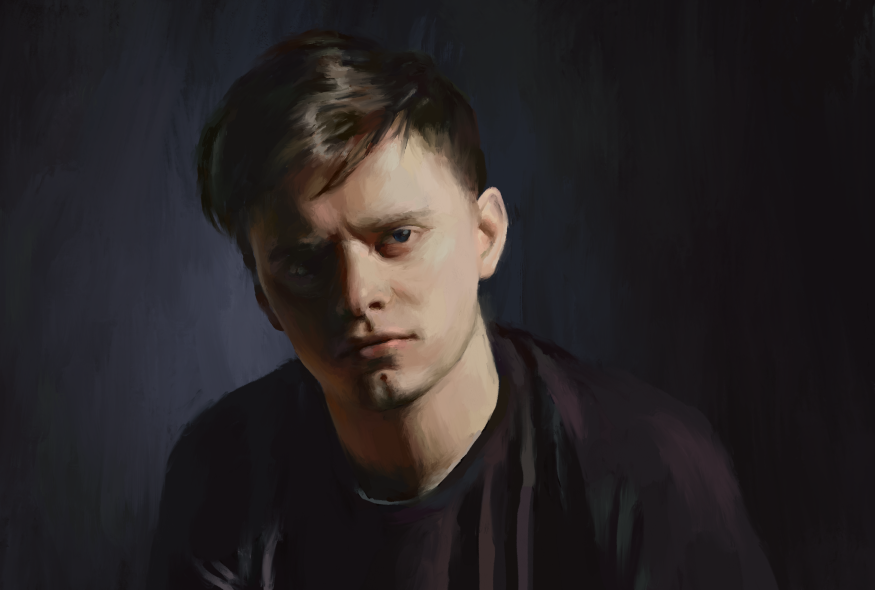
Denys Antipov: Defending the most valuable

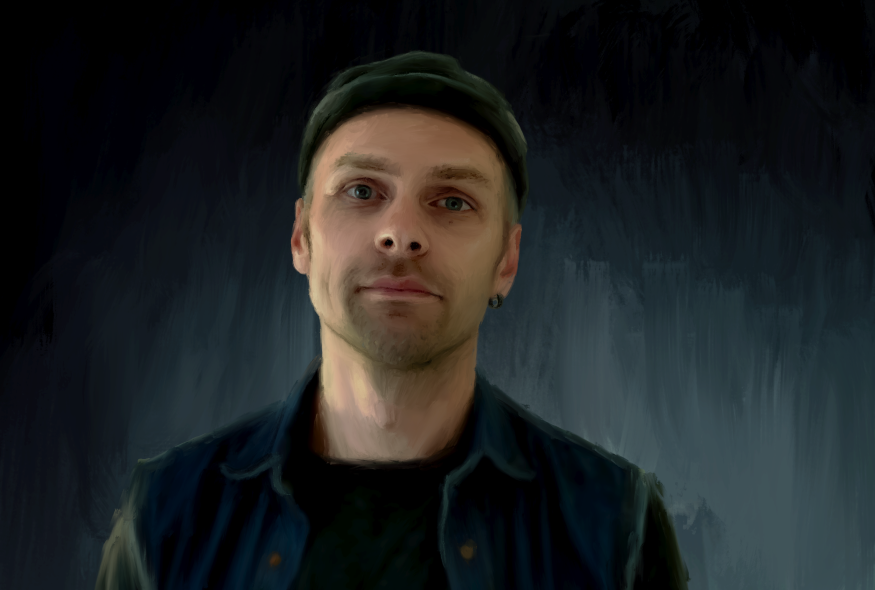
Hidden in a quiet, snow-covered semi-forest-semi-park on the outskirts of Kyiv is the former Partisan Glory Museum building. An exhibition dedicated to Denys Antipov, who died on May 11, 2022, in battle in Kharkiv Oblast, was held there. Denys was smiling in all the photos—a slender young man comfortably seated at the controls of a propeller aircraft at a military airfield in Boryspil; a determined graduate posing in front of the camera with a just-received diploma in philology and Korean language translation; a tired and frozen but still smiling serviceman standing frozen in a trench in Donbas under blue-yellow and red-black flags. In the adjacent room of the museum, another exhibition was ongoing, dedicated to the liberation struggles of 1917-21, a topic that Denys had been interested in throughout his life. The historical figures he read about—Symon Petliura, Volodymyr Vynnychenko, Yevhen Konovalets—told their stories on the wall in the next room. The struggle for the creation of a sovereign Ukrainian state in the 20th century transformed into a fight to preserve independence in the 21st; the Partisan Glory Museum became the Occupation Museum, and the street leading to its doors, Slavhorodska Street, now bears the name of Denys Antipov.
**
History repeats itself, continuing and unfolding before our eyes. Denys felt its intricacy at his fingertips. Ukrainian statehood failed to materialize one hundred years ago, crushed in a chaotic, bloody whirlwind of events. The failure of the Hetmanate followed the failure of the Central Rada, and then the Directorate; military campaigns transformed into partisan movements; the Soviet occupation yielded to the German one and cunningly returned again. One hundred years ago, Ukraine lost the opportunity for independence but not the hope for it.
Denys never forgot what was once lost, reclaimed, and consequently valued. "I don’t know where he got that patriotism; I guess it was with him from birth," said Denys’ mother, Maria Antipova.
In the sixth grade, Denys gathered friends on March 9th and set off to Kaniv, to Chernecha Hill, to honor the memory of Taras Shevchenko on the poet’s birthday. "There was a snowstorm, but they took the first train in the morning," said his mother. "In Kaniv, they read Shevchenko’s poems, and when Denys returned home, he had so much energy in him, as if he had been to a holy place."
Denys’ cheerful, energetic nature, humor, and enthusiasm rarely left him, even during his student years and numerous public actions. He tried not to miss any, knowing that the danger of losing the state had not disappeared. He saw Russia’s encroachment in every monument to Lenin, which still stood in Kyiv, as if marking the borders of the empire. "In 2009, activists broke the nose of that Lenin standing on Shevchenko Boulevard. It happened on Denys’ birthday, and he considered it the best gift," recalled his friend Oleh Slabospytskyi.
Denys and Oleh were born on the same day as the UPA Supreme Commander Roman Shukhevych, whose myth became significant for Denys throughout his life. Together with friends, he joined other activists every year, forming a "chain of unity" on Unity Day on January 22nd; he never missed the opportunity to mock the marches of the "immortal regiment" on May 9th; and in 2012, suddenly serious, he fasted for four days in protest against the prospect of granting the Russian language the status of a state language.
Denys’ civic activism extended beyond the streets and squares. He ran several humorous public pages on social media, such as "Cossack Quote Book," "Galician Cracklings," and "Railway Restaurant "Witnesses of the Fifth Universal,’" which was particularly popular. There, Denys told stories of liberation struggles and created memes featuring Ukrainian politicians and hetmans as protagonists. On Denys’ page, they were funny, bewildered, self-loving, and forced to choose the lesser evil time and time again. "We have an internal joke in the ‘Railway,’" Denys shared in an interview with Radio Liberty. "At first, you laugh at our pictures, and then you bitterly cry and bow, like a kalyna."
Denys knew that Ukraine’s history was filled with tragic moments but tried to retell it with humor. He ironically narrated stories about military leader Pavlo Skoropadskyi, who went to Germany, or about Volodymyr Vynnychenko, who, after leading the Directorate, decided to return to the USSR. However, he never mocked the soldiers who persistently fought to their last breath for Ukrainian statehood. "In the Directorate’s carriage, and under the carriage — the entire territory," Denys recalled an old Ukrainian joke, knowing for sure that this territory was worth fighting for. So when the Revolution of Dignity began, he acquired a piece of blue fabric, painted the stars of the European Union on it, and stood under them on the Maidan. Denys’ father, Hennadiy Antipov, remembered that "He was on Maidan almost every day. Twice he called me late at night and said, ‘Dad, pick me up, I smell like gasoline, the police will grab me in the subway immediately.’ He’d come home, rest, and then went back to the barricades."
It was from his father, a military aviation engineer and later a radio operator for the Antonov An-225 Mriya, that Denys inherited his love for the sky. He joined the military at the start of the Russian-Ukrainian war in 2015, mastering the specialty of an airborne reconnaissance operative on the fly. His second-cousin grandfathers, who joined the ranks of the Ukrainian Insurgent Army centuries ago, had the pseudonyms Dub (Oak) and Lystok (Leaf). Denys received the callsign Buk.
In the army, he maintained his discipline, enthusiasm, and sense of humor. He played backgammon with his brothers-in-arms and, to the amusement of all, translated their names into Korean. Referring to himself as a veteran of the so-called ideological meme war, he posted memeified and translated interceptions of conversations of Russian soldiers in ten languages on social media. He wanted people around the world to hear how invaders threatened to "take Berlin again." He gave numerous interviews to foreign journalists and recorded videos himself. In one of them, he filmed a liberated and devastated village in Kharkiv Oblast. "That’s what we’ve got," Denys murmured off-camera, capturing the battered street on which, despite everything, spring had come with green leaves.
"He never hid how tough it was for them at the front," said Oleh, "but he never lost hope." In the museum photos that have now become part of history, Denys is seen holding a drone in his hands, squinting at the sun of the eastern steppe, cuddling a cat amidst a road destroyed by heavy machinery that more resembles a dirty swamp, and raising the Ukrainian flag over the reclaimed Mykolayivka in Donetsk Oblast. Denys always had flags with him, both the blue and yellow and the red and black. With these flags, he returned home on a shield.
**
"Ukraine has a lot in common with Korea—both the trauma of a divided country and bellicose neighboring empires," Denys shared on the radio about his decision to study the Korean language. Such a choice was indeed not the most obvious for a young man from Ivano-Frankivsk, but Denys never feared going against the grain and had a great curiosity for learning. "We have more bookshelves at home than drawers for dishes," Maria laughed. "When Denys decided to join the Department of Eastern Languages and Literature, he went to Pochaina, to the book market, and bought a bunch of books about the history of South Korea." He graduated from the university and remained to teach at the department, leaving it only twice, when he joined the Armed Forces of Ukraine in 2015 and 2022.
He had a talent for teaching. He was demanding but also enjoyed joking and always knew how things were going with each student, whether they had problems at home or not. "What do people need? A kind word. And Denys had such a word for everyone," said Maria.
"Some students joined the Department of Eastern Languages and Literature because they were fascinated by Korean culture and music. The ‘Korean wave’ reached many countries and captivated numerous people," noted Denys, explaining that Ukraine could borrow from South Korea. Culture can be a powerful diplomatic tool, changing the world’s perception of countries that have experienced or are experiencing difficult wars. Symon Petliura knew this when he sent a Ukrainian choir on tour to sing "Shchedryk" in Austria, France, the United Kingdom, and other western countries while the Bolshevik army occupied Ukraine; Denys, of course, knew it too, insisting that the Ukrainian language and song should be heard worldwide.
He effortlessly combined his enthusiasm for Korea with his love for Ukraine. Walking through the corridors of the Taras Shevchenko National University of Kyiv’s Philology Institute, he greeted all his colleagues with the words "Glory to Ukraine." Always smiling—even if only with his eyes—he hurried on. "He constantly came up with numerous ideas and amazingly managed everything," said Hennadiy.
Denys hardly slept at night, consumed by a fervor for action. He taught at the university and engaged in a veteran business, crafting skillfully-made Ukrainian souvenirs. At the beginning of the war, he designed mobile prosthetics for soldiers who’d lost their upper limbs, and during the pandemic, he manufactured protective plastic shields for healthcare workers. He studied at the Kyiv School of Economics, then joined public protests, the reasons for which never seemed to end.
Only when he returned home to his family house in the Carpathians did he slow down. In the evenings, he would step into the yard and gaze at the stars, which he couldn’t see in the dazzling cities. Denys loved the night sky. He knew the names of the constellations shining above his head, just as he knew that history under indifferent stars repeats itself over and over. Once, Ukraine lost its independence—Denys believed that we would not let it happen again.
Denys’ parents established the Denys Antipov Charitable Foundation, where they honor the memory of their son and raise funds for an annual prize for researchers, and the Denys Antipov Scholarship for students of Korean Studies at the Educational and Scientific Institute of Philology at Taras Shevchenko National University.

TEXT: LENA KOZAR
Denys Antipov: Defending the most valuable
Hidden in a quiet, snow-covered semi-forest-semi-park on the outskirts of Kyiv is the former Partisan Glory Museum building. An exhibition dedicated to Denys Antipov, who died on May 11, 2022, in battle in Kharkiv Oblast, was held there. Denys was smiling in all the photos—a slender young man comfortably seated at the controls of a propeller aircraft at a military airfield in Boryspil; a determined graduate posing in front of the camera with a just-received diploma in philology and Korean language translation; a tired and frozen but still smiling serviceman standing frozen in a trench in Donbas under blue-yellow and red-black flags. In the adjacent room of the museum, another exhibition was ongoing, dedicated to the liberation struggles of 1917-21, a topic that Denys had been interested in throughout his life. The historical figures he read about—Symon Petliura, Volodymyr Vynnychenko, Yevhen Konovalets—told their stories on the wall in the next room. The struggle for the creation of a sovereign Ukrainian state in the 20th century transformed into a fight to preserve independence in the 21st; the Partisan Glory Museum became the Occupation Museum, and the street leading to its doors, Slavhorodska Street, now bears the name of Denys Antipov.
**
History repeats itself, continuing and unfolding before our eyes. Denys felt its intricacy at his fingertips. Ukrainian statehood failed to materialize one hundred years ago, crushed in a chaotic, bloody whirlwind of events. The failure of the Hetmanate followed the failure of the Central Rada, and then the Directorate; military campaigns transformed into partisan movements; the Soviet occupation yielded to the German one and cunningly returned again. One hundred years ago, Ukraine lost the opportunity for independence but not the hope for it.
Denys never forgot what was once lost, reclaimed, and consequently valued. "I don’t know where he got that patriotism; I guess it was with him from birth," said Denys’ mother, Maria Antipova.
In the sixth grade, Denys gathered friends on March 9th and set off to Kaniv, to Chernecha Hill, to honor the memory of Taras Shevchenko on the poet’s birthday. "There was a snowstorm, but they took the first train in the morning," said his mother. "In Kaniv, they read Shevchenko’s poems, and when Denys returned home, he had so much energy in him, as if he had been to a holy place."
Denys’ cheerful, energetic nature, humor, and enthusiasm rarely left him, even during his student years and numerous public actions. He tried not to miss any, knowing that the danger of losing the state had not disappeared. He saw Russia’s encroachment in every monument to Lenin, which still stood in Kyiv, as if marking the borders of the empire. "In 2009, activists broke the nose of that Lenin standing on Shevchenko Boulevard. It happened on Denys’ birthday, and he considered it the best gift," recalled his friend Oleh Slabospytskyi.
Denys and Oleh were born on the same day as the UPA Supreme Commander Roman Shukhevych, whose myth became significant for Denys throughout his life. Together with friends, he joined other activists every year, forming a "chain of unity" on Unity Day on January 22nd; he never missed the opportunity to mock the marches of the "immortal regiment" on May 9th; and in 2012, suddenly serious, he fasted for four days in protest against the prospect of granting the Russian language the status of a state language.
Denys’ civic activism extended beyond the streets and squares. He ran several humorous public pages on social media, such as "Cossack Quote Book," "Galician Cracklings," and "Railway Restaurant "Witnesses of the Fifth Universal,’" which was particularly popular. There, Denys told stories of liberation struggles and created memes featuring Ukrainian politicians and hetmans as protagonists. On Denys’ page, they were funny, bewildered, self-loving, and forced to choose the lesser evil time and time again. "We have an internal joke in the ‘Railway,’" Denys shared in an interview with Radio Liberty. "At first, you laugh at our pictures, and then you bitterly cry and bow, like a kalyna."
Denys knew that Ukraine’s history was filled with tragic moments but tried to retell it with humor. He ironically narrated stories about military leader Pavlo Skoropadskyi, who went to Germany, or about Volodymyr Vynnychenko, who, after leading the Directorate, decided to return to the USSR. However, he never mocked the soldiers who persistently fought to their last breath for Ukrainian statehood. "In the Directorate’s carriage, and under the carriage — the entire territory," Denys recalled an old Ukrainian joke, knowing for sure that this territory was worth fighting for. So when the Revolution of Dignity began, he acquired a piece of blue fabric, painted the stars of the European Union on it, and stood under them on the Maidan. Denys’ father, Hennadiy Antipov, remembered that "He was on Maidan almost every day. Twice he called me late at night and said, ‘Dad, pick me up, I smell like gasoline, the police will grab me in the subway immediately.’ He’d come home, rest, and then went back to the barricades."
It was from his father, a military aviation engineer and later a radio operator for the Antonov An-225 Mriya, that Denys inherited his love for the sky. He joined the military at the start of the Russian-Ukrainian war in 2015, mastering the specialty of an airborne reconnaissance operative on the fly. His second-cousin grandfathers, who joined the ranks of the Ukrainian Insurgent Army centuries ago, had the pseudonyms Dub (Oak) and Lystok (Leaf). Denys received the callsign Buk.
In the army, he maintained his discipline, enthusiasm, and sense of humor. He played backgammon with his brothers-in-arms and, to the amusement of all, translated their names into Korean. Referring to himself as a veteran of the so-called ideological meme war, he posted memeified and translated interceptions of conversations of Russian soldiers in ten languages on social media. He wanted people around the world to hear how invaders threatened to "take Berlin again." He gave numerous interviews to foreign journalists and recorded videos himself. In one of them, he filmed a liberated and devastated village in Kharkiv Oblast. "That’s what we’ve got," Denys murmured off-camera, capturing the battered street on which, despite everything, spring had come with green leaves.
"He never hid how tough it was for them at the front," said Oleh, "but he never lost hope." In the museum photos that have now become part of history, Denys is seen holding a drone in his hands, squinting at the sun of the eastern steppe, cuddling a cat amidst a road destroyed by heavy machinery that more resembles a dirty swamp, and raising the Ukrainian flag over the reclaimed Mykolayivka in Donetsk Oblast. Denys always had flags with him, both the blue and yellow and the red and black. With these flags, he returned home on a shield.
**
"Ukraine has a lot in common with Korea—both the trauma of a divided country and bellicose neighboring empires," Denys shared on the radio about his decision to study the Korean language. Such a choice was indeed not the most obvious for a young man from Ivano-Frankivsk, but Denys never feared going against the grain and had a great curiosity for learning. "We have more bookshelves at home than drawers for dishes," Maria laughed. "When Denys decided to join the Department of Eastern Languages and Literature, he went to Pochaina, to the book market, and bought a bunch of books about the history of South Korea." He graduated from the university and remained to teach at the department, leaving it only twice, when he joined the Armed Forces of Ukraine in 2015 and 2022.
He had a talent for teaching. He was demanding but also enjoyed joking and always knew how things were going with each student, whether they had problems at home or not. "What do people need? A kind word. And Denys had such a word for everyone," said Maria.
"Some students joined the Department of Eastern Languages and Literature because they were fascinated by Korean culture and music. The ‘Korean wave’ reached many countries and captivated numerous people," noted Denys, explaining that Ukraine could borrow from South Korea. Culture can be a powerful diplomatic tool, changing the world’s perception of countries that have experienced or are experiencing difficult wars. Symon Petliura knew this when he sent a Ukrainian choir on tour to sing "Shchedryk" in Austria, France, the United Kingdom, and other western countries while the Bolshevik army occupied Ukraine; Denys, of course, knew it too, insisting that the Ukrainian language and song should be heard worldwide.
He effortlessly combined his enthusiasm for Korea with his love for Ukraine. Walking through the corridors of the Taras Shevchenko National University of Kyiv’s Philology Institute, he greeted all his colleagues with the words "Glory to Ukraine." Always smiling—even if only with his eyes—he hurried on. "He constantly came up with numerous ideas and amazingly managed everything," said Hennadiy.
Denys hardly slept at night, consumed by a fervor for action. He taught at the university and engaged in a veteran business, crafting skillfully-made Ukrainian souvenirs. At the beginning of the war, he designed mobile prosthetics for soldiers who’d lost their upper limbs, and during the pandemic, he manufactured protective plastic shields for healthcare workers. He studied at the Kyiv School of Economics, then joined public protests, the reasons for which never seemed to end.
Only when he returned home to his family house in the Carpathians did he slow down. In the evenings, he would step into the yard and gaze at the stars, which he couldn’t see in the dazzling cities. Denys loved the night sky. He knew the names of the constellations shining above his head, just as he knew that history under indifferent stars repeats itself over and over. Once, Ukraine lost its independence—Denys believed that we would not let it happen again.
Denys’ parents established the Denys Antipov Charitable Foundation, where they honor the memory of their son and raise funds for an annual prize for researchers, and the Denys Antipov Scholarship for students of Korean Studies at the Educational and Scientific Institute of Philology at Taras Shevchenko National University.
Denys Antipov was born on June 30, 1989, in Ivano-Frankivsk. In 2006, he enrolled at Taras Shevchenko National University of Kyiv and began studying at the Department of Eastern Languages and Literatures of the Educational and Scientific Institute of Philology. He underwent language training and studies in South Korea twice: in 2008 at Seoul National University and in 2011 at Hankuk University of Foreign Studies. After obtaining his degree, he worked as an assistant at the Department of Eastern Languages and Literatures of the Educational and Scientific Institute of Philology. From June 2015 to April 2016, he served on the front line, performing combat tasks as an airborne reconnaissance operative in the 81st Airborne Assault Brigade. From 2016, he engaged in the development of his own business, a store called Anticius, and a shop producing various souvenir products under the brand UA GIFTS.
In 2018, Denys underwent training at the Kyiv School of Economics under the entrepreneurship program for ATO and JFO veterans. In October-November 2021, he visited the United States as part of the UBL (Ukrainian Business Leaders) program. On February 25, 2022, he joined the 95th Separate Airborne Assault Brigade and headed to the front. He tragically lost his life on May 11, 2022, in a defensive battle near the village of Dovhenke in the Izium district of Kharkiv Oblast. On July 29, 2022, according to the Decree of the President of Ukraine No. 541/2022, he was posthumously awarded the Order of Bohdan Khmelnytskyi, 3rd degree. Denys was also posthumously awarded the title of "Honorary Citizen of Kyiv," and in his honor, Slavhorodska Street in Kyiv and Herulivka Street in the village of Khotymyr in the Ivano-Frankivsk Oblast were renamed.
Read also:
We need your help to create projects and materials aimed to defend freedom of speech, popularize Ukrainian culture and values of independent journalism.
Your donation means support for discussions, awards, festivals, authors’ trips to regions and PEN book publications.