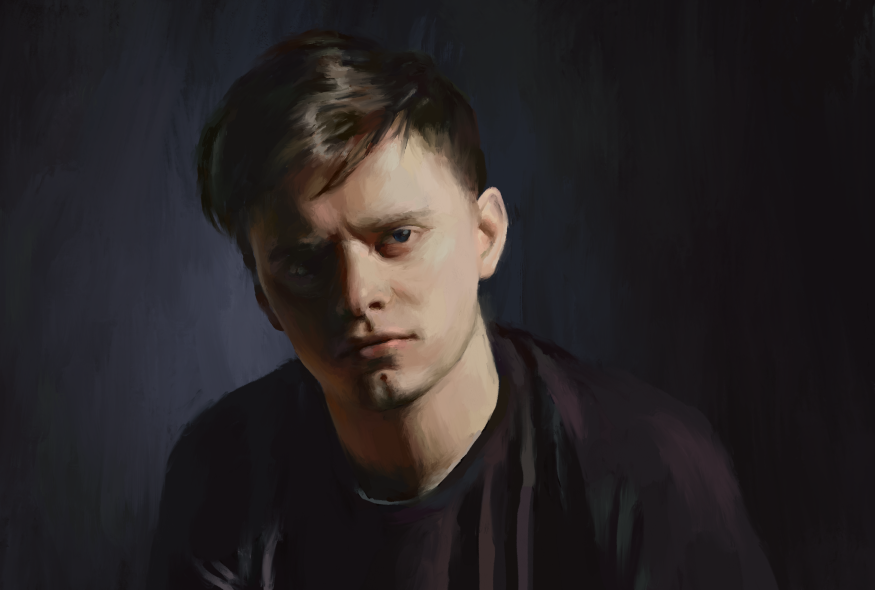
Iryna Osadcha: Soft Resistance
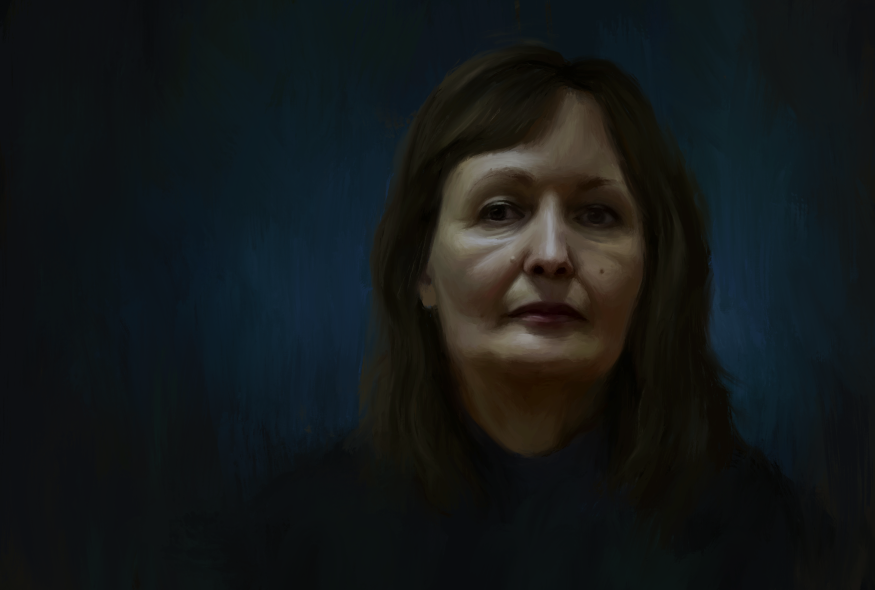
They say that when war breaks out and the enemy approaches one’s home, people can be divided into three categories: those who flee, those who take up arms, and those who are ready to live under occupation. The first involves a timely evacuation plan. The second requires courage. The third means life in lawlessness and fear. Preserving oneself is the most difficult aspect of the last option.
Iryna Osadcha, the director of the Local History Museum in Kupiansk, died on April 25, 2023. She’d survived the occupation, threats from Russian military forces, and the evacuation of her family amid battles for the liberation of the city . Despite these difficulties, she successfully hid from the Russians embroidered shirts that were a century old and later transported them to Kharkiv.
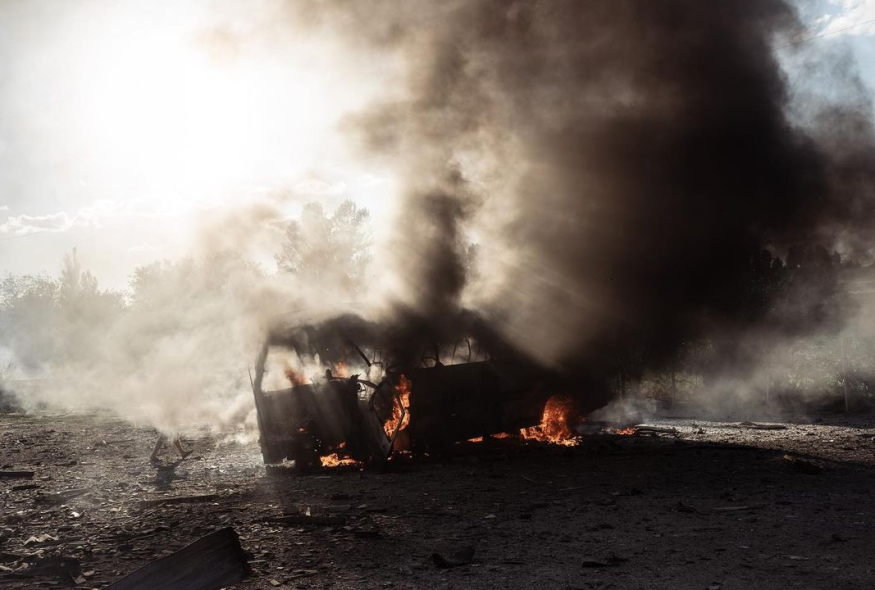
Failing to break Osadcha’s spirit during the occupation, the Russians ultimately killed her by targeting the museum with an S-300 missile. The director had managed to preserve the museum exhibits but lost her life.
**
Iryna Osadcha took over as the head of the Kupiansk Local History Museum in 2014. Under her ten-year leadership, the once-neglected cultural institution transformed into one of the most interesting museums in all of Kharkiv Oblast.
"The museum was founded in 1972 to preserve the memory and history of our famous city," the director noted in one of the local television programs several years before the invasion.
Despite her administrative role, Iryna greatly enjoyed giving museum tours. She would discuss the origins of the name Kupiansk—which originated from the pits dug by marmots—as well as local customs and material culture. She also showcased an original map of the city from 1902 and recounted the life of Marko Kropyvnytskyi, a prominent figure in Ukrainian theater who had resided in Kupiansk. In a video on social media, Osadcha personally demonstrated to children from a boarding school in Kharkiv how an ancient loom worked.
From the museum’s inception to its final days, most exhibits were largely derived from artifacts donated by Kupiansk residents. At one point, a local offered to donate an ancient loom from their courtyard. The director agreed, repaired the loom, and learned how to operate it. Some of the parts had to be sourced all the way from Kyiv. Afterwards, she took spinning lessons from elderly residents in nearby villages. Eventually, the loom became one of the museum’s most fascinating specimens.
"Almost every household in Kupiansk and the surrounding district used to have tapestries. Even today, you can see such woven rugs in grandmothers’ homes in the villages," Osadcha told schoolchildren from Kharkiv. Following such a tour, the meaningful statement about intergenerational connections became a personal, hands-on experience for children.
"There were also embroidered shirts, antique women’s clothing, jewelry, ancient patchwork sewing, household items, a collection of jugs, and irons (at the museum)," recalled Svitlana Riazanova , who in 2017 organized a trip for Kharkiv students from a boarding school to Kupiansk.
"After visiting the museum, I remembered how my own great-grandmother used to spin yarn on a spindle with a wheel, taking it out into the courtyard in the summer," said Andriy Soshnykov, who came to Kupiansk on a business trip. "My mother confirmed this memory, which unexpectedly emerged from beneath the layers of childhood memories." Osadcha’s personal interest in local heritage helped rekindle visitors’ fading knowledge of history.
Over ten years of work at the museum, Osadcha wove, thread by thread, a tapestry of her region’s memory. Perhaps she felt that her actions not only rekindled a sense of connection among others but also instilled a sense of responsibility, even if it was just for that small piece of land beneath a tapestry.
**
When Russian military forces entered the city, Iryna Osadcha didn’t prioritize her own evacuation. Instead, she hid photos of Anti-Terrorist Operation (ATO) participants that had been on display in the museum since 2014. First and foremost, the occupiers were searching for those who had previously fought against them in eastern Ukraine.
Soon enough, the Russians prohibited Osadcha from leaving the city. "They emphasized that she was a public figure and, therefore, had to stay. They threatened to send her to the so-called ‘room for reflection’ if she declined to continue working at the museum," recounted Alyona Yakutina, the daughter of the deceased. Testimonies from liberated cities reveal that these rooms were not for thinking but for interrogations and torture.
"In those rare moments when my mother called me from the occupation, she would insist that everything was fine, but I could see tears in her eyes on the screen. She was constantly being monitored and controlled," recalled her daughter. However, Osadcha did not give up and found the strength and ways to uphold her integrity in the presence of the enemy.
She managed to hide not only photographs of soldiers and their brigade’s battle flag with signatures but also ancient embroidered shirts from the museum’s exhibition. Moreover, even during the occupation, Osadcha went to work wearing an embroidered shirt and spoke in the Kupiansk dialect. Through these seemingly innocent gestures, she upheld her dignity and found within the local identity a potential for soft resistance to the occupation.
Another challenge for the director arose when the occupiers tasked her with organizing a celebration for the annual city day. However, Osadcha’s ingenuity enabled her to find a solution even in this difficult situation. On that day, she distributed a book of Ukrainian-language memoirs titled "Kupiansk in the Flow of History" and magnets depicting the city against a yellow-blue flag background. By appealing to local history, the director reminded the townspeople that Kupiansk is Ukraine.
**
Iryna Osadcha not only knew the history of the region well but also her own roots. She created a photo album with a family tree spanning several generations. In addition to material objects of heritage, the museum director collected proverbs and fairy tales from villages.
"My mom used to tell my three-year-old niece a fairy tale about a pyndyk. In our regional dialect, pyndyk means ‘clever.’ The plot was reminiscent of the story of Ivasyk-Telesyk, who outsmarted a snake, put it on a shovel, and baked it in the oven. We joked that while other grandmothers tell children about Kolobok , our mom told stories about pyndyk," recalled Alyona Yakutina. Unfortunately, during an enemy attack on the museum, the archive of fairy tales was destroyed.
Among all the family memories, one that was significant for Osadcha was the story of her grandfather, Hryhoriy. While serving in the Soviet army, he ended up in German captivity. After the end of World War II, Soviet prisoners were sent home by train. Exhausted and emaciated, Hryhoriy found the strength to jump off the train when he saw his native Kupiansk through the window. However, a different danger awaited him at home. The Soviet state accused surviving POWs of collaboration and imprisoned them. To avoid such a fate, Hryhoriy changed his name to Georgiy and never admitted to having fought in the war. Perhaps this story was the first lesson of resistance for Osadcha.
"Visits to our great-grandmother and stories about the past were a special family event for my sister and me," recalled Alyona Yakutina. "Now I understand that this is how my mother instilled in us a sense of connection between generations, which we must now pass on to her grandchildren."
**
After the liberation of Kupiansk, those who held any administrative position faced a conversation with law enforcement agencies in Ukraine. The Ukrainian state recognized Iryna Osadcha as innocent, and the director remained in Kupiansk to preserve the museum and its exhibits.
It is said that the shirts Osadcha evacuated to Kharkiv after the liberation garnered genuine admiration from employees of the regional museum. Iryna began to fear that such valuable objects would be difficult to return to the museum in Kupiansk after victory.
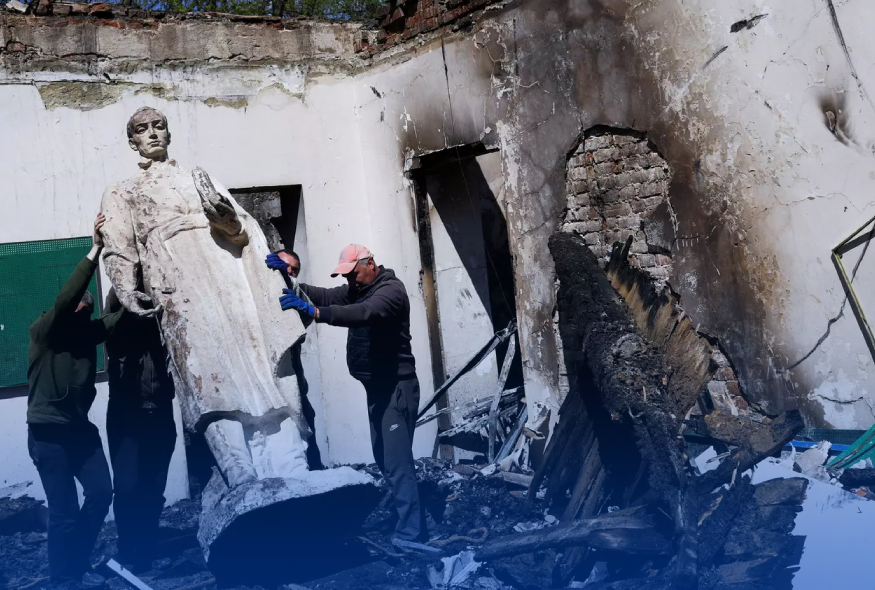
On the day Iryna Osadcha was killed, she had planned to transport the final set of exhibits from Kupiansk, as the Russians have continued to target the city since its liberation. The museum was the only surviving cultural institution in the area. After its destruction, none are left in Kupiansk.
Under the ruins of the museum—a former men’s spiritual seminary—a Russian missile buried artifacts that Osadcha had tried to save. However, neither the loss of the historical building nor the loss of exhibits is as grave as the death of a person who was building bridges between past and present.
Iryna Osadcha imparted a lesson in cultural memory to everyone and showcased the power of subtle resistance. Like that pyndyk, she managed to outsmart the Russian snake and put it in the oven instead of herself. But the snake returned with a vengeance and took the most precious thing from her—life.
Read also:
We need your help to create projects and materials aimed to defend freedom of speech, popularize Ukrainian culture and values of independent journalism.
Your donation means support for discussions, awards, festivals, authors’ trips to regions and PEN book publications.