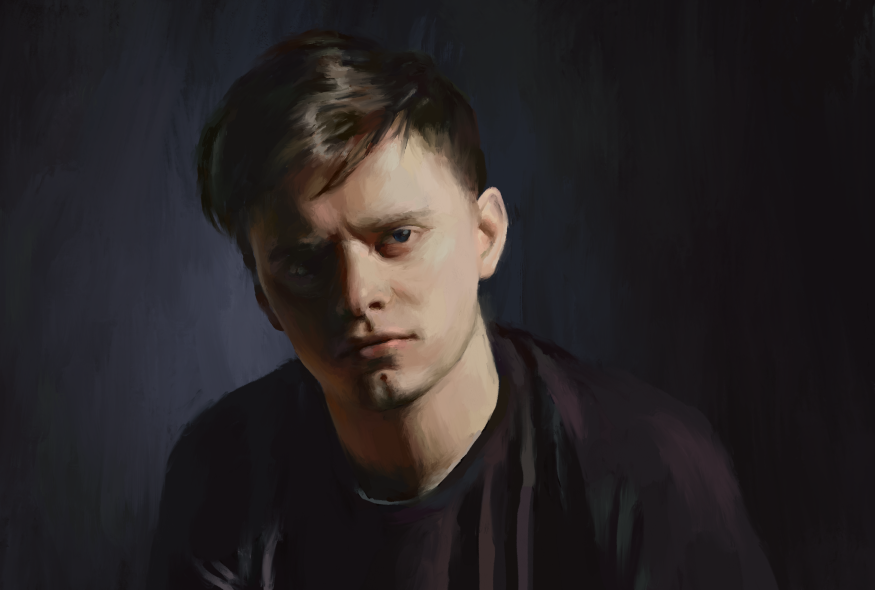
Olha Pavlenko-Kolyorovo: The art of taste


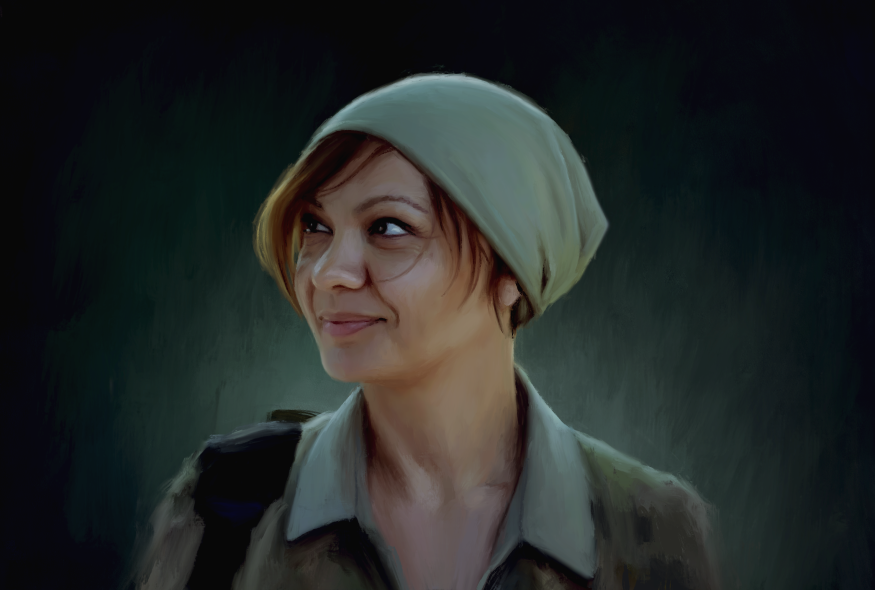
A quirky girl who was not known in Kyiv or Lviv–this was how the Ukrainian gastro-cultural community spoke in the summer of 2022 of Olha Pavlenko, who was born in Uspenka, on the border of Kirovohrad and Poltava Oblasts. Color and taste, along with art and cookery, were the guiding forces in her life. She dedicated herself to teaching children the art of creativity, delved into the exploration of Ukrainian cuisine, actively sought out age-old recipes, and compiled them into a captivating gastro-ethno-art book. Adding a vibrant touch to her persona, she dyed her hair green and adopted the pseudonym Kolyorovo.
Olha led a spirited artistic life alongside the children of Kremenchuk in her art studio, which was also called Kolyorovo. They painted, sewed clothes inspired by vintage drawings, crafted finger puppets for theatrical performances, engaged in cooking sessions, adorned Easter eggs with intricate designs, and worked with dough. Further extending her creative reach, Olha orchestrated The Eighth Color charity auctions where her students sold their works and donated the proceeds to children with cancer.
Olha worked with students with special needs for free, buying the materials at her own expense. As her mother Raisa Pavlenko said, "Everyone has to express themselves. Olha gave them this opportunity." The artist involved children with special needs in the organization of the creative process: "They laid out the pencils, arranged the palettes prepared in advance, poured water, attached paper to the board. Those were fairly simple tasks, but our children were happy to be useful and trusted," said Olena Sazonova, showing photos of her son Yehor in the Kolyorovo studio: Olha helping a blond boy with duct tape; Yehor working with dough along with other children and parents, and the crowded photo illuminated by Olha’s bright green hair in the foreground, the color of thetraffic light; the studio preparing for the traditional tea party after classes, and Olha wrapping her arms around the smiling blond boy’s shoulders. In their last photo, taken together in February 2022, he had grown so much that Olha could barely reach his chest.
Olena then showed a photo of Kremenchuk’s rooftops with a column of black smoke diagonally cutting the summer sky. "This is what we saw from our window when the Amstor shopping center was ablaze. We had no idea that Olya was there."
Before the full-scale invasion, Olha had received a green card and decided to explore life on another continent. Her flight to the United States was booked for February 24, 2022. She and her daughter had managed to reach Poland by walking twenty kilometers to the border. At the end of April, Olha returned to Ukraine, bringing nine suitcases of aid with her. On June 27, Russians killed her in the missile attack on the Amstor shopping center in Kremenchuk.
**
"Gastronomic culture was an art, perhaps the primary art for her," Raisa recalled. "What’s the first thing you offer to strangers? Food. And you always want to return to places where the food was delicious."
Olha Kolyorovo engaged with older generations to document the stories behind overlooked dishes. Through these forgotten stories, the essence of the country subtly revealed itself. In Bessarabia, amid the mix of ethnic Ukrainians, Bulgarians, Romanians, and Gagauz, Olha came across a delightful culinary treasure she knew from her childhood in Uspenka: Christmas cookies covered with beetroot juice and decorated with lazurivka icing resembling intricate frost patterns that truly chilled the mouth with its minty flavor. The cookies took the form of "ladies," served to girls, and "horses" for boys. Olha got both: in the week leading up to Christmas Eve, she "kneaded, baked, grated beets, and drew patterns" with the village elder Tarasivna, who preserved this tradition in Uspenka.
During her culinary expeditions, she found edible Christmas "ladies" in the Bessarabian village of Plakhtiyivka. Following a trail of flour crumbs, Olha learned that southern Plakhtiyivka was founded two centuries ago by immigrants from her native village. Then, in 1826, when the tsarist gendarmerie announced the creation of a military settlement in Uspenka, the inhabitants of the old Cossack village revolted. They were punished for this with broken windows and smashed stoves during the December frosts. Some of the Uspenka villagers fled to the south, where they founded the village of Plakhtiyivka, which was the historical name of Uspenka. "It was like coming home," Olha said, " In the past two hundred years, they have managed to preserve not only recipes and rituals, but also our central Ukrainian dialect."
A Christmas "lady," a doll with a cross on its face reminiscent of both traditional motankas and the geometricized peasant women of Boychukists and Malevich, adorns the cover of the book Living Ukrainian Cuisine by Olha Kolyorovo. The red leather binding, which resembles Poltava plakhta, holds recipes and stories of regional dishes with the author’s photographs, as well as more than a hundred standalone and group illustrations in watercolor, stickers, postcards, bookmarks, and envelopes. These unexpected treasures were created by Olha, as if revealing culinary horizons for personal discoveries and their joyful sharing. This culinary encyclopedia marks that special period when joy and openness returned to Ukrainian gastronomic history.
"Trust in the world is built through food," noted Olena Stiazhkina, author of The Taste of the Soviet, a study of food practices in the 1960s and 1980s. "A Soviet person had no chance to build trust in the world." Food in the Soviet Union was turned into a punitive tool. The Holodomor is a radical example of such measures. In the late post-Soviet period, food had already been transformed into fuel meant to saturate the worker’s body with calories, devoid of sensory experiences or memories of one’s roots. A distinct form of labor and punishment involved standing in lines for a meager ration of products, the endurance of which did not guarantee a positive outcome. The unified and joyless Soviet rationing system–with its olivier salad on New Year’s Day and gray pasta every day–deprived eaters of two important things: choice and identity.
Lush, vibrant, and sensually charged, Olha Kolorova’s Living Ukrainian Cuisine brought us back to these characteristics of gastronomic culture, shattering stereotypes about Ukrainian culinary traditions. If there’s borsch, it’s the Kupala variety from Sumy Oblast featuring ritual halushky–a type of dumplings–and crayfish. Alternatively, it could be the western Ukrainian Christmas borsch with herring-filled kraplyky, another type of dumplings. If there’s salo, it’s in beetroot kvass, and the varenyky are made of custard dough. Then there’s carp in spicy honey, Uspenka kapustnyak–cabbage soup–along with hychka covered with millet, pasuli in sour cream, shulyk with poppy seeds, honey and dandelion caviar, cob porridge with chanterelles, tsvikli and potaptsi… Living Ukrainian Cuisine evokes the feasts from the works of the 18th century author Ivan Kotliarevsky, who was generously quoted by Olha throughout the text. The restoration of forgotten Ukrainian dishes is also the restoration of taste: for history, personal choice, and freedom.
Olha Kolyorovo planned to bring 365 recipes to life in her two-volume book, Living Ukrainian Cuisine. She was able to publish the first volume, but only managed to sell a few dozen copies. After her death, more than five hundred people waited in line for the new edition of her culinary encyclopedia. Ukrainian chefs, food bloggers, food technology students, and relatives of Ukrainian prisoners of war cook dishes according to her recipes.
On the International Day in Support of Victims of Torture, women who are still waiting for their loved ones to return from the Russian gulags gather at the Last Barricade restaurant in Kyiv, named after the three Ukrainian revolutions. They honor the memory of Olha Kolyorovo by cooking according to her recipes for those who have been returned from captivity.
What will a person who was tortured with hunger, who cries at the sight of an apple after losing up to forty kilograms in weight, who wakes up at night to hold a piece of bread in their hands and look at the borsch in the fridge want? They will want comforting food that tastes sweet and warm, smells like home, and promises that from now on and forever there will be plenty. "Whether it’s an everyday or festive dish, but so delicious that even the gods of Olympus wouldn’t be ashamed to present it," was how Olya described the "little fluffy buns" that are Poltava pundyky–a traditional Ukrainian dish–and quoted their mention in the margins of the 18th century poem Eneida. Ukrainians who undergo rehabilitation in a military hospital after Russian prisons are treated with Poltava pundyky, drizzled with honey from Olha’s parents’ home apiary.
"It’s harder for you than for us," the men who were tortured just a few weeks ago tell the women who are still waiting for their loved ones to be returned from captivity. They dip pundyky in Uspenka honey. The women hug close strangers. In the space between them, the strength to keep going is being baked.
There are pastries that make you shrink or grow, apples that lull you to sleep in a crystal coffin, pumpkins that will transport you to a royal ball, treats that can revive the taste of life–Olha Kolyorovo knew all their recipes. This legacy of hers is preserved in those red-bound pages reminiscent of the Poltava plakhta.
Now, Oksana Levkova takes care of the promotion and distribution of Living Ukrainian Cuisine by Olha Kolyorovo
Olha Pavlenko was born on February 10, 1984 in the village of Uspenka, Kirovohrad Oblast. She studied at Makarenko Pedagogical College in Kremenchuk, majoring in fine arts. Olha also graduated from Kirovohrad Vynnychenko Pedagogical University with a degree in Foreign Literature and German. In 2005, she gave birth to her daughter Sofia. Olha had always wanted to work with children outside the school system, so in 2011, she opened the Kolyorovo art studio in Kremenchuk. In 2021, she finished work on the first volume of her artistic and culinary book Living Ukrainian Cuisine, which was published in February 2022. Olha Pavlenko died on June 27, 2022, as a result of a Russian missile attack on the Amstor shopping center in Kremenchuk.
Read also:
We need your help to create projects and materials aimed to defend freedom of speech, popularize Ukrainian culture and values of independent journalism.
Your donation means support for discussions, awards, festivals, authors’ trips to regions and PEN book publications.