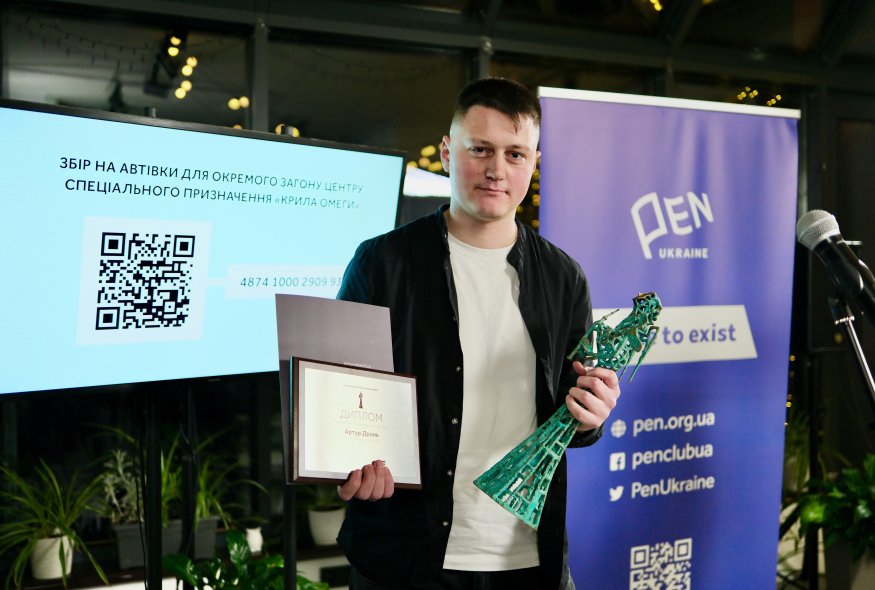
George Gongadze and all the murdered journalists commemorated in Kyiv
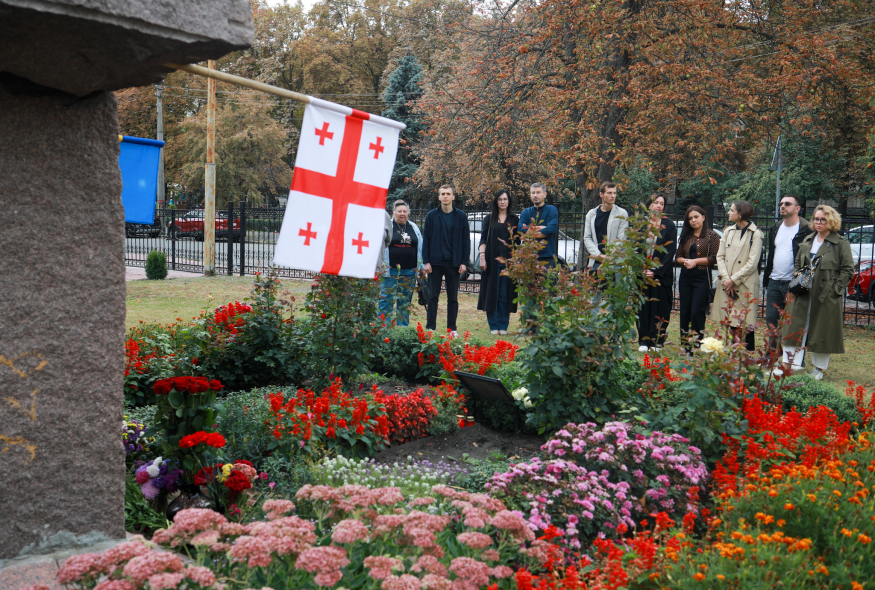
September 16 marked 23 years since the abduction and murder of the Ukrainian journalist George Gongadze.
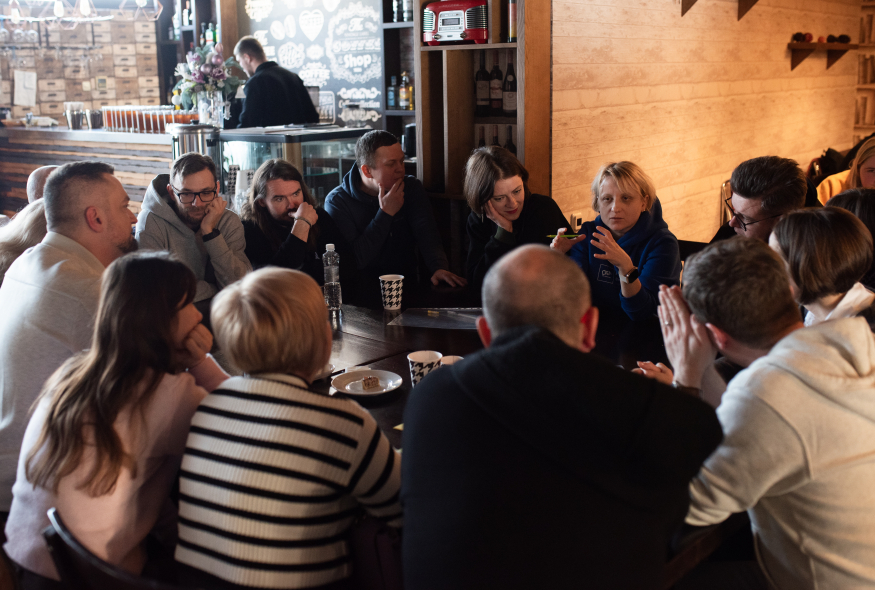
His colleagues and representatives of human rights and media organizations traditionally commemorated George Gongadze and all the murdered journalists near his grave in the Podil district of Kyiv.

"Ukrainian society began to take birth during the Ukraine Without Kuchma resistance action, which was, on its part, a response to the murder of George Gongadze. In early 2000s, those protests gave impetus to the Orange Revolution and then to the Revolution of Dignity. An important lesson is to be learned from the story of George Gongadze’s life and tragic death. The freedom of speech is suppressed gradually and imperceptibly, bitten off in small pieces and never returned but at the cost of tremendous sacrifice – sometimes of that of human lives. This is why we should never compromise on the freedom of speech, never tolerate political censorship or self-censorship, no matter what smokescreens of war they hide behind," said Myroslava Barchuk, journalist, TV presenter, laureate of the George Gongadze Prize 2021.
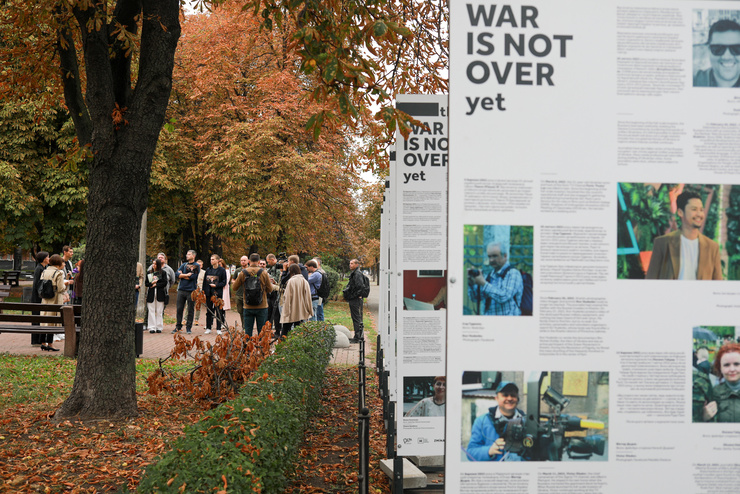
At the same time, the updated photo exhibition The War Is Not Over Yet, dedicated to Russia’s crimes against journalists and the media in Ukraine since February 24, 2022, was opened in the Illinskyi park. In Kyiv, the exhibition will last till October 8. For over a year, it has been travelling across Ukraine. The exhibition has already been exposed in Kyiv, Kharkiv, Ternopil, Poltava, Boyarka, Vinnytsia, and Odesa.
"66 media workers have died in Ukraine since the beginning of Russia’s full-scale invasion. 10 among them were killed whilst engaged in their professional activity. These are considerable losses for Ukraine in the eighteen months. Those people fought for the truth at the risk of their own lives. Some of them covered the most tragic events in the newest history of Ukraine, while the others took up arms to defend us at the frontline. Journalists have always been a target for Russia to silence them and prevent them from telling the truth about Russians’ crimes worldwide," remarked Kateryna Diachuk, expert in the monitoring of the freedom of speech with the Institute of Mass Information.
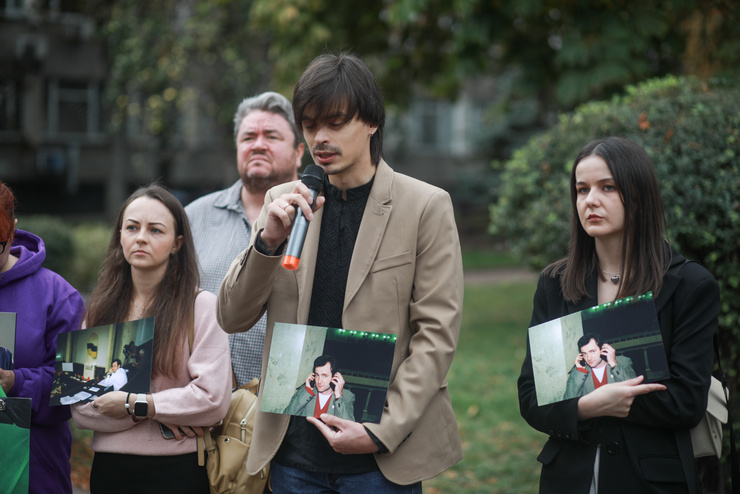
"Russians deprived our journalists of the right to practice their profession, as dozens of our colleagues had to enlist in the army since the beginning of the full-scale invasion. Those who still remain in profession and try to convey the truth about our war, run a great risk because Russians are not waging a conventional war. They don’t care about cameras and blue body armors. Journalists constitute just the same target for them as servicepeople do," said Stas Kozliuk, journalist, photographer and fixer.
Imprisoned Crimean journalists who have paid with their freedom for the right to tell what’s going on in the occupied peninsula, were also mentioned during the event.
"15 Crimean journalists remain imprisoned in Russia and Russian-occupied territories. 12 of them are Crimean Tatars. The aggressor state resorted to the politically motivated persecution of journalists, fabricating cases against them, accusing them of terrorism, sabotage, and storage of explosive substances just to reduce them to silence. We should not give up but strive for their release: this primarily applies to those journalists who, like Iryna Danylovych or Amet Suleymanov, have serious health problems because they simply may not survive until their being released," said Tetyana Pechonchyk, Board Chairwoman of the Human Rights Centre ZMINA.
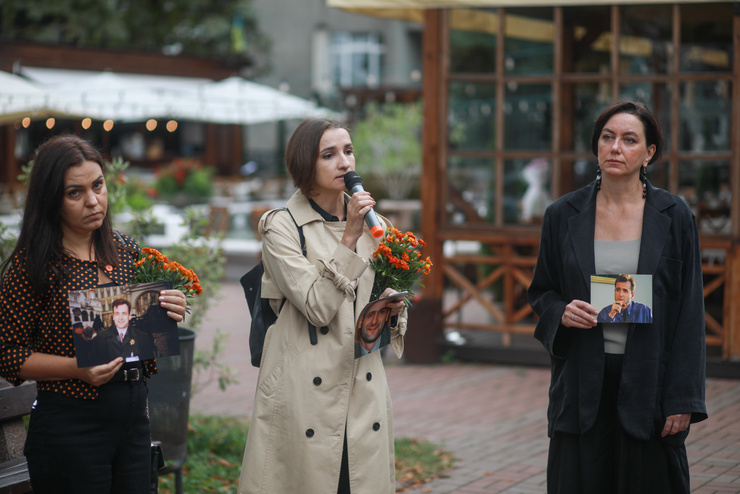
"Since the time of Gongadze’s death, the new generation of journalists was shaped in Ukraine. George is already a man from history books for these young people. Yet for all of us – and I consider this very important to emphasize – it is not just an event to commemorate our colleague, it’s an event that combines our memory about the dead, solidarity with colleagues, imprisoned or persecuted by the occupiers, and quest for justice in both George’s case and the cases of all our colleagues killed by Russia’s genocidal war against our country," stated Tetyana Teren, executive director of PEN Ukraine.
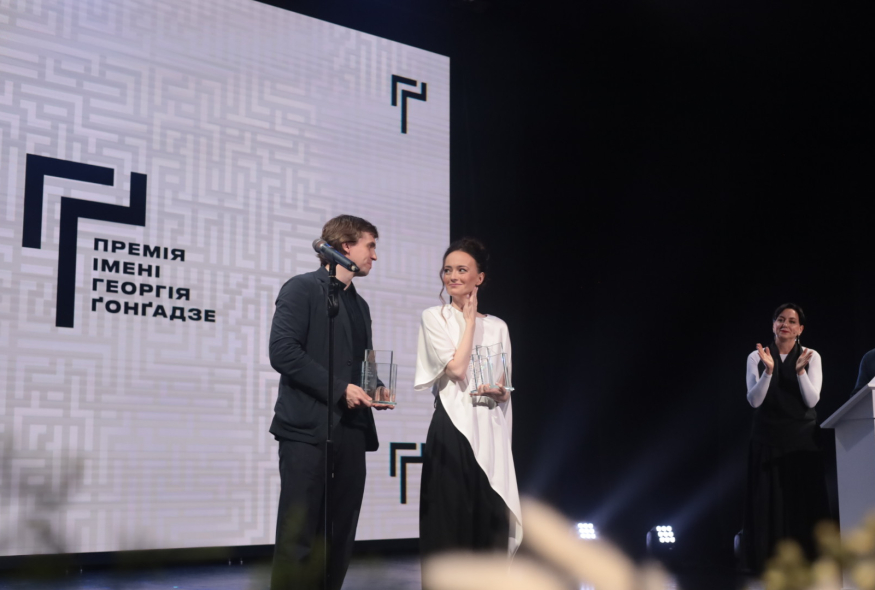
The commemorative event, dedicated to George Gongadze and all the murdered Ukrainian journalists, was organized by the George Gongadze Prize, PEN Ukraine, ZMINA, and the Institute of Mass Information. Together with the National Museum of the Revolution of Dignity, they are also co-organizers of the photo exhibition The War Is Not Over Yet.
Iryna Ivanchenko
0997725667
Read also:
We need your help to create projects and materials aimed to defend freedom of speech, popularize Ukrainian culture and values of independent journalism.
Your donation means support for discussions, awards, festivals, authors’ trips to regions and PEN book publications.